Blog

  • Earn Your Bachelor’s Degree Online for Beginners

    Earn Your Bachelor’s Degree Online for Beginners

    Are you wondering if it’s possible to earn a reputable degree from the comfort of your own home? With the rise of online education, the answer is a resounding yes!

    Many individuals are now turning to online bachelor’s degree programs as a flexible and convenient way to further their education. But what exactly does it mean to be a beginner in online education, and how can you get started?

    Earning a bachelor’s degree online can be a great way to boost your career prospects and increase your earning potential. In this article, we’ll explore the benefits and process of online education for beginners.

    Key Takeaways

    • Flexibility and convenience of online education
    • Benefits of earning a bachelor’s degree online
    • Getting started with online bachelor’s degree programs
    • Career prospects and earning potential
    • Overview of the online education process

    Understanding Online Bachelor Degree Programs for Beginners

    For beginners, understanding the nuances of online bachelor degree programs is crucial in making an informed decision about their educational future. Online education has come a long way, offering a viable alternative to traditional on-campus programs.

    What Makes Online Degrees Different

    Online degree programs are designed to provide flexibility and accessibility, allowing students to complete coursework on their own schedule. This is particularly beneficial for those with work or family commitments.

    Benefits of Pursuing an Online Bachelor’s Degree

    The benefits of online education are numerous. Flexibility and accessibility are key advantages, enabling students to balance their studies with other responsibilities. Online programs also often offer a more personalized learning experience.

    Benefits Traditional Programs Online Programs
    Flexibility Limited High
    Accessibility Limited by location Global access
    Personalization Varies by instructor Often more personalized

    Common Misconceptions About Online Education

    Despite its growing popularity, online education is still surrounded by misconceptions. Some believe that online degrees are less rigorous or less respected than traditional degrees. However, many reputable institutions now offer online programs that are just as rigorous and respected as their on-campus counterparts.

    By understanding the differences, benefits, and realities of online bachelor degree programs, beginners can make informed decisions about their educational path.

    Assessing Your Readiness for Online Learning

    Before diving into an online bachelor’s degree program, it’s crucial to assess your readiness for the unique challenges it presents. Online education, particularly for top beginner online bachelor degrees, requires a blend of technical skills, personal discipline, and a supportive environment.

    Required Technical Skills and Equipment

    A reliable computer, stable internet connection, and necessary software are the foundational elements for online learning. Ensure your device meets the program’s technical requirements and consider investing in a backup internet source.

    A modern home office setup emphasizing online learning. In the foreground, a clean desk featuring a sleek laptop displaying educational content, surrounded by a notebook, a pen, and a steaming mug of coffee. The middle section shows an ergonomic chair, vibrant potted plants, and an open window with soft natural light spilling in. The background features a well-organized bookshelf filled with textbooks on various subjects, adding an academic atmosphere. The lighting is bright and inviting, creating a warm, motivating vibe suitable for study. A professional individual in smart casual attire sitting at the desk, focused and engaged in learning, conveys a sense of readiness and determination. The overall mood is uplifting and inspiring, perfect for illustrating the concept of preparing for online education.

    Self-Discipline and Time Management Considerations

    Online programs, such as beginner-friendly online bachelor programs, demand strong self-discipline. Create a schedule and stick to it, setting aside dedicated time for studying and minimizing distractions.

    Support Systems You’ll Need

    A robust support system is vital. This includes family and friends who understand your educational commitments, as well as online resources and support services provided by your institution.

    By evaluating these aspects, you can better prepare yourself for the challenges of online learning and set a strong foundation for success in your chosen program.

    Choosing the Right Online Bachelor Degree Program

    With numerous online bachelor degree programs available, choosing the right one requires careful consideration. As a beginner, it’s essential to navigate through the various options to find a program that aligns with your academic and professional goals.

    Researching Accredited Institutions

    The first step in selecting an online bachelor’s degree is to ensure that the institution offering the program is accredited by a recognized accrediting agency. Accreditation is crucial as it ensures that the program meets certain standards of quality. You can check the accreditation status on the institution’s website or through the Council for Higher Education Accreditation (CHEA) website.

    Evaluating Program Structures and Flexibility

    Different programs offer varying structures and levels of flexibility. Some programs are designed to be highly flexible, allowing you to complete coursework on your own schedule, while others may require more synchronous participation. Consider your learning style and schedule when evaluating program structures.

    Key factors to consider:

    • Course format (asynchronous vs. synchronous)
    • Availability of accelerated courses
    • Opportunities for internships or practical experiences

    Comparing Costs and Financial Aid Options

    Understanding the cost of the program and available financial aid is vital. Tuition rates vary significantly between institutions, and some programs may offer more financial aid options than others.

    Scholarships Specifically for Online Students

    Many institutions offer scholarships specifically for online students. These can be merit-based or need-based. It’s worth exploring the financial aid section of the institution’s website to discover available opportunities.

    Federal Aid Eligibility for Online Programs

    Online students are eligible for federal financial aid, including grants and loans, if the institution is accredited and participates in federal aid programs. Completing the Free Application for Federal Student Aid (FAFSA) is a crucial step in determining your eligibility.

    By carefully researching accredited institutions, evaluating program structures, and comparing costs and financial aid options, you can make an informed decision about which online bachelor degree program is right for you.

    The Application Process for Online Programs

    For beginners, navigating the application process for online bachelor’s degrees can be challenging without the right guidance. Understanding the steps involved can make a significant difference in successfully enrolling in online bachelor degree programs for beginners.
    A professional and inviting study environment showcasing the online bachelor degree application process for beginners. In the foreground, a diverse group of adults, dressed in smart casual attire, engage with laptops and paperwork at a wooden table stacked with books and college brochures. The middle ground features a large, clear monitor displaying an application form and joyful thumbs-up emojis representing success. The background includes shelves filled with academic books and plants, creating a warm, inspiring atmosphere. The lighting is soft and natural, sunlight streaming through a window to create a welcoming glow. The angle captures the interaction among the group while emphasizing focus and determination, evoking a sense of optimism and achievement.

    Gathering Required Documents

    The first step in applying to online programs is gathering the necessary documents. Typically, these include:

    • High school diploma or equivalent
    • Transcripts from previous educational institutions
    • Standardized test scores (if required)
    • Letters of recommendation

    Writing Personal Statements and Essays

    Many online programs require applicants to submit personal statements or essays. These are opportunities to showcase your motivation, goals, and why you’re a good fit for the program. Tailor your essays to highlight your strengths and interests relevant to the degree.

    Submitting Applications and Following Up

    Once all documents are ready, it’s time to submit your application. Ensure that you:

    1. Double-check all information for accuracy
    2. Submit your application before the deadline
    3. Follow up with the admissions office if you haven’t received a confirmation

    By carefully following these steps, you can simplify the application process for online bachelor degree programs for beginners and move closer to achieving your educational goals.

    Setting Up Your Online Learning Environment

    For beginners, starting an online bachelor’s degree program requires more than just enrolling; it demands a conducive learning environment. A well-structured study space can significantly enhance your learning experience and productivity.

    Creating an Effective Study Space

    Designate a quiet, dedicated area for studying, free from distractions. Ensure it’s equipped with a comfortable chair, a reliable computer, and good lighting. Minimize noise and interruptions to maintain focus.

    Essential Software and Digital Tools

    Familiarize yourself with the necessary software and tools required for your online program. This may include learning management systems (LMS), virtual classroom tools, and productivity software.

    Tool Purpose
    LMS Course content and assignments
    Virtual Classroom Live lectures and discussions
    Productivity Software Document editing and collaboration

    Organizing Your Digital Materials

    Keep your digital files organized using clear file names and folders. Regularly back up your data to prevent loss.

    Navigating Your First Semester Online

    The first semester of an online bachelor’s program can be both exciting and intimidating, but with the right approach, you can set yourself up for success. As you begin, it’s essential to understand the various tools and systems that will be your gateway to learning.

    Understanding Learning Management Systems

    Most online programs use a Learning Management System (LMS) to host course materials, assignments, and discussions. Familiarizing yourself with the LMS is crucial. “A robust LMS is the backbone of any successful online program,” says Dr. Jane Smith, an expert in online education.
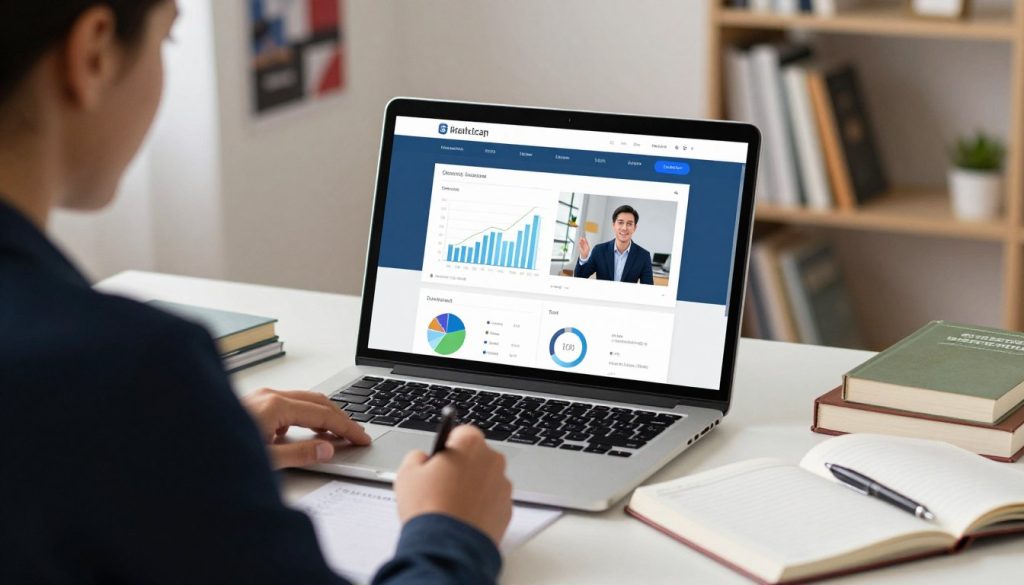
    A modern online learning management system interface displayed on a laptop screen, set on a desk with study materials like textbooks and notebooks scattered around. In the foreground, a focused individual in professional business attire sits attentively, taking notes and engaging with the online course. The middle layer features the illuminated laptop screen with graphs and educational content vividly displayed, while the background includes a tidy, well-lit study space with bookshelves and motivational posters subtly enhancing the atmosphere. Soft, warm lighting creates an inviting and productive environment, with a shallow depth of field emphasizing the learner’s engagement. The overall mood conveys diligence and optimism for embarking on the journey of online education.

    Take time to explore the LMS, understand its layout, and learn how to navigate its various sections. This will help you stay organized and ensure you never miss an important deadline or discussion.

    Communicating with Professors and Peers

    Effective communication is key in an online environment. When reaching out to professors or peers, be clear, concise, and respectful. Use proper email etiquette, including a clear subject line and a professional greeting.

    Effective Online Communication Etiquette

    • Use a clear and concise subject line
    • Begin with a professional greeting
    • Be respectful and courteous
    • Proofread your message before sending

    Participating in Virtual Discussions and Group Projects

    Virtual discussions and group projects are integral parts of online learning. They not only help you engage with the course material but also foster a sense of community. When participating in these activities, be sure to contribute thoughtfully and respond to your peers’ posts.

    Meeting Deadlines in a Virtual Environment

    Meeting deadlines is crucial in an online program. Use a planner or digital calendar to keep track of assignment due dates and exam schedules. “Staying organized is the key to success in online education,” notes John Doe, a successful online student.

    By understanding the LMS, communicating effectively, and participating actively, you’ll be well on your way to navigating your first semester online with confidence.

    Strategies for Success in Online Bachelor Degree Programs for Beginners

    Success in online bachelor degree programs requires a combination of dedication, the right strategies, and a supportive environment. For beginners, navigating this new educational landscape can be challenging, but with the right approach, it can also be highly rewarding.

    Effective Study Techniques for Online Courses

    Developing effective study techniques is crucial for success in top beginner online bachelor degrees. This includes creating a dedicated study space, setting a regular study schedule, and using digital tools to stay organized. Active learning techniques, such as summarizing notes in your own words and engaging in online discussions, can also enhance understanding and retention.

    Balancing Work, Life, and Online Education

    One of the key challenges for students in beginner-friendly online bachelor programs is balancing their academic responsibilities with work and personal life. Effective time management is essential, involving prioritizing tasks, setting realistic goals, and maintaining a healthy work-life balance. Utilizing calendars and planners can help stay on track.

    Utilizing Available Resources and Support Services

    Online students have access to a variety of resources and support services designed to help them succeed. Understanding how to utilize these resources effectively is crucial.

    Academic Support Resources

    Many institutions offer academic support services, including online tutoring, writing centers, and academic advising. Taking advantage of these resources can significantly improve academic performance and overall learning experience.

    Mental Health and Wellness Services

    Mental health and wellness are equally important for students in online programs. Many institutions provide access to counseling services, stress management resources, and wellness programs. Prioritizing mental health can help students maintain a positive and productive learning environment.

    By implementing these strategies, students in beginner-friendly online bachelor programs can set themselves up for success, achieving their academic goals while maintaining a healthy balance in their lives.

    Conclusion: Your Path to an Online Bachelor’s Degree

    Earning an online bachelor’s degree can be a life-changing decision, offering flexibility and accessibility for those looking to start or advance their careers. Online bachelor degrees designed for beginners provide a supportive learning environment, helping newcomers navigate the world of higher education.

    As discussed, choosing the right online program is crucial. Easy online bachelor programs for newcomers offer a range of benefits, including flexible scheduling and tailored support services. By understanding your needs and goals, you can select a program that sets you up for success.

    Now is the perfect time to take the first step towards your online degree. With the right mindset and resources, you can achieve your educational goals and unlock new opportunities. Start exploring online bachelor degree programs today and discover a path that’s right for you.


    FAQ

    What are the benefits of pursuing an online bachelor’s degree as a beginner?

    Pursuing an online bachelor’s degree as a beginner offers several benefits, including flexibility, accessibility, and the ability to balance work, life, and education. Online programs are designed to be beginner-friendly, providing a supportive environment for those new to online learning.

    How do I know if an online bachelor degree program is accredited?

    To verify if an online bachelor degree program is accredited, check the institution’s website for accreditation information or contact the accrediting agency directly. You can also check with the US Department of Education or the Council for Higher Education Accreditation (CHEA) for a list of recognized accrediting agencies.

    What technical skills and equipment do I need for online learning?

    To succeed in online learning, you’ll need a reliable computer, internet connection, and basic software such as a word processor and web browser. Familiarity with learning management systems and digital tools is also helpful. Many institutions provide technical support and resources to help you get started.

    How do I balance work, life, and online education?

    Balancing work, life, and online education requires effective time management, self-discipline, and a support system. Create a schedule that works for you, prioritize tasks, and communicate with your employer, family, and friends about your needs.

    What kind of support services are available to online students?

    Online students have access to a range of support services, including academic advising, mental health and wellness services, and technical support. Many institutions also offer online resources, such as writing centers and tutoring services, to help you succeed.

    Can I receive financial aid for online bachelor degree programs?

    Yes, many online bachelor degree programs are eligible for financial aid, including federal aid, scholarships, and grants. Complete the Free Application for Federal Student Aid (FAFSA) to determine your eligibility and explore additional funding options.

    How do I stay organized and manage my time effectively in an online program?

    To stay organized and manage your time effectively, create a dedicated study space, use a planner or calendar, and set reminders for deadlines. Utilize digital tools, such as to-do lists and time tracking software, to help you stay on track.

    What are the most popular online bachelor degree programs for beginners?

    Popular online bachelor degree programs for beginners include business, healthcare, information technology, and liberal arts. These programs are often designed to be beginner-friendly, providing a solid foundation for further study or career advancement.
  • Affordable Online Diploma Courses: Flexible, Accredited Options

    Affordable Online Diploma Courses: Flexible, Accredited Options

    Are you ready to take the next step in your career but struggling to fit traditional education into your busy schedule? Flexible learning options are now available, allowing you to balance your studies with work and personal commitments.

    With the rise of accredited online programs, you can now access high-quality education from the comfort of your own home. This shift has opened up new opportunities for those looking to enhance their skills without the financial burden of traditional college fees.

    Key Takeaways

    • Flexible scheduling to fit around your lifestyle
    • Accredited programs recognized by employers
    • Cost-effective alternatives to traditional education
    • Access to a wide range of courses and specializations
    • Self-paced learning to suit your needs

    What Makes Online Diploma Programs Worth Your Investment

    The value of online diploma programs lies in their ability to provide accredited education at your own pace. This flexibility is crucial for working professionals who need to balance their career and educational pursuits. As noted by a leading education expert, “Online learning has revolutionized the way we approach education, making it more accessible and affordable.”

    “The future of education is not in bricks and mortar, but in bytes and bandwidth.”

    Key Advantages of Digital Learning Environments

    Digital learning environments offer several key advantages, including flexibility and accessibility. Students can access course materials and lectures at any time, allowing them to study at their own pace. This is particularly beneficial for those with busy schedules or those living in remote areas.

    Moreover, online diploma programs often provide a range of interactive tools and resources, such as discussion forums and virtual classrooms, which enhance the learning experience.

    How Online Diplomas Compare to Traditional Certificates

    When comparing online diplomas to traditional certificates, several factors come into play. Online diplomas are often more flexible and can be completed at the student’s own pace, whereas traditional certificates may require on-campus attendance. However, both types of credentials have their own value and are recognized in different contexts.

    It’s essential to consider your career goals and educational needs when deciding between online diplomas and traditional certificates.

    How to Find Affordable Online Diploma Courses That Match Your Goals

    The journey to finding the perfect online diploma program begins with a thorough understanding of your educational and career needs. With the rise of affordable distance learning diplomas, individuals can now pursue further education that aligns with their professional goals without the constraints of traditional classroom settings.

    Defining Your Career Objectives and Educational Needs

    Before diving into the search for online diploma courses, it’s crucial to define your career objectives and understand what educational background is required to achieve them. This involves assessing your current skills, identifying areas for improvement, and determining the specific knowledge you need to advance in your chosen field.

    Researching Institutions and Program Offerings

    Once you have a clear understanding of your goals, the next step is to research institutions that offer best online diploma courses in your desired field. Look for programs that are accredited, have a strong reputation, and offer flexible scheduling to accommodate your lifestyle.

    A modern home office scene illuminated by soft, natural light streaming in from a large window. In the foreground, a diverse group of three professionals in business casual attire is engaged in a video call on a laptop, discussing affordable online diploma courses. The middle ground features an open notebook with colorful sticky notes and a cup of coffee, symbolizing the study environment. In the background, a bookshelf filled with educational resources and a small plant adds a touch of life to the space. The overall mood is inviting and focused, conveying a sense of motivation and opportunity for personal growth. The composition should have a warm color palette, enhancing the atmosphere of flexibility and accessibility in education.

    Using Comparison Tools and Resources

    To make an informed decision, it’s helpful to use comparison tools and resources. These can include online forums, educational websites, and comparison tables that outline the key features of different programs.

    Program Features Program A Program B Program C
    Duration 6 months 12 months 9 months
    Cost $1,000 $1,500 $1,200
    Accreditation Yes Yes No

    By carefully defining your objectives, researching program offerings, and utilizing comparison tools, you can find an online diploma course that not only fits your budget but also supports your career aspirations.

    Step-by-Step Guide to Evaluating Program Credibility

    The process of evaluating an online diploma program’s credibility involves several key steps that can help you make a well-informed decision. Ensuring that your chosen program is legitimate and accredited is crucial for your future career prospects.

    Verifying Accreditation Status and Legitimacy

    Verifying the accreditation status of an online diploma program is the first step in evaluating its credibility. Accreditation ensures that the institution meets certain standards of quality.

    Regional vs. National Accreditation Explained

    Understanding the difference between regional and national accreditation is vital. Regional accreditation is generally considered more prestigious and is typically awarded to non-profit, degree-granting institutions.

    How to Check an Institution’s Credentials

    You can check an institution’s accreditation status by visiting the Council for Higher Education Accreditation (CHEA) website or the US Department of Education’s database.

    Identifying Red Flags and Avoiding Diploma Mills

    Diploma mills are institutions that provide degrees without ensuring students meet proper educational standards. Be cautious of programs that promise quick degrees or have no clear admission requirements.

    Reading Student Reviews and Success Metrics

    Student reviews and success metrics can provide valuable insights into the effectiveness of an online diploma program. Look for reviews on multiple platforms to get a well-rounded view.

    Criteria Accredited Programs Diploma Mills
    Accreditation Yes, from recognized accrediting agencies No, or from unrecognized agencies
    Program Length Varies, but typically follows standard guidelines Often promises quick completion
    Cost Transparent, with detailed breakdowns Often has hidden fees or high upfront costs

    By following these steps and being aware of the red flags, you can ensure that you invest in a legitimate and accredited online diploma program.

    “Accreditation is a critical factor in ensuring the quality of online diploma programs. It’s essential to verify an institution’s accreditation status before enrolling.”

    Council for Higher Education Accreditation

    Managing Costs and Financing Your Online Diploma

    As you consider an online diploma, it’s essential to break down the true costs and explore financing options to achieve your educational goals. Understanding the financial aspects of your decision can help you make informed choices and avoid unexpected expenses.

    Breaking Down the True Cost of Online Programs

    The cost of online diploma programs can vary significantly depending on the institution, program length, and field of study. When calculating the total cost, consider not only tuition but also additional fees, course materials, and technology requirements. Some programs may offer all-inclusive pricing, while others may charge separately for these components.

    A cozy home office scene depicting a table with an open laptop displaying a vibrant online diploma on the screen. In the foreground, a hand reaches for a coffee mug with a pencil and notepad nearby, symbolizing study and organization. The middle ground features a decorative plant and neatly arranged books showcasing various fields of study. In the background, soft, natural light filters through a window, casting warm reflections on the wall, creating a productive and inviting atmosphere. The overall mood is inspiring and focused, highlighting the accessibility and affordability of online diploma courses. No people are present, ensuring a clean, distraction-free portrayal of the study environment.

    Exploring Financial Aid, Scholarships, and Payment Plans

    Many institutions offer financial aid, scholarships, and payment plans to help make online diplomas more affordable. Researching these options can significantly reduce your out-of-pocket expenses. Federal financial aid may be available for accredited programs, and some schools offer institutional scholarships or grants.

    Employer Tuition Assistance and Reimbursement Options

    Another valuable resource for financing your online diploma is employer tuition assistance or reimbursement programs. Many companies invest in their employees’ education as part of their professional development initiatives. Investigating these opportunities can help you fund your education while advancing your career.

    By carefully examining the costs and exploring available financing options, you can make your online diploma more affordable and achieve your educational goals without undue financial strain.

    How to Succeed in Your Online Diploma Program

    The key to thriving in an online diploma program lies in effective time management and utilizing available support services. Succeeding in such programs requires a combination of dedication, the right resources, and a strategic approach to learning.

    Creating an Effective Study Schedule and Environment

    To excel in online diploma courses for career advancement, it’s essential to establish a conducive study environment. This involves creating a dedicated study space that is free from distractions and setting a schedule that balances study time with other responsibilities.

    By prioritizing tasks and using time management tools, students can stay on track and ensure they’re meeting their program’s requirements.

    Utilizing Available Resources and Support Services

    Most online diploma programs offer a range of resources and support services designed to help students succeed. These can include academic support, career counseling, and technical assistance.

    By taking full advantage of these resources, students can overcome challenges more effectively and stay focused on their goals.

    Strategies for Staying Motivated and Completing Your Program

    Staying motivated is crucial for completing an online diploma program. Setting clear goals and celebrating small achievements can help maintain momentum.

    Time Management Techniques for Working Students

    For working students, managing time effectively is vital. Techniques such as the Pomodoro Technique can help balance work, study, and personal life.

    Building a Support Network of Peers and Mentors

    Building a support network of peers and mentors can provide valuable guidance and encouragement. Engaging with fellow students and program advisors can enhance the learning experience and provide insights into the field.

    By implementing these strategies, students can enhance their chances of success in online diploma programs and achieve their career advancement goals.

    Transforming Your Future with Online Education

    Affordable online diploma courses offer a flexible and accessible way to enhance your skills and advance your career. By choosing the right program, you can gain the knowledge and credentials needed to succeed in today’s competitive job market.

    As discussed, verifying accreditation status, managing costs, and staying motivated are crucial steps in your educational journey. By following these guidelines, you can make the most of your online learning experience and achieve your goals.

    With the right mindset and resources, you can transform your future and unlock new opportunities. Explore affordable online diploma courses today and take the first step towards a brighter tomorrow.

    FAQ

    What are the benefits of pursuing an online diploma course?

    Online diploma courses offer flexibility, accessibility, and affordability, making them an attractive option for those looking to advance their careers or gain new skills. They also provide the opportunity to learn from anywhere, at any time, as long as you have a stable internet connection.

    How do I know if an online diploma program is accredited?

    To verify if an online diploma program is accredited, you can check the institution’s website for accreditation information or look up the accrediting agency’s website. You can also contact the institution directly to ask about their accreditation status. Accredited online diplomas are recognized by employers and other educational institutions.

    Can I finance my online diploma course?

    Yes, many institutions offer financial aid, scholarships, and payment plans to help make online diploma courses more affordable. You can also explore employer tuition assistance and reimbursement options. It’s essential to research and compare the financial aid options available to you.

    How do online diploma courses compare to traditional certificates?

    Online diploma courses offer the same level of expertise and knowledge as traditional certificates, but with the added flexibility of online learning. They are designed to be more accessible and convenient, making them an excellent option for those with busy schedules or limited mobility.

    What are the best online diploma courses for career advancement?

    The best online diploma courses for career advancement vary depending on your industry and career goals. Some popular options include business, healthcare, technology, and creative fields. Researching institutions and program offerings can help you find the most suitable course for your needs.

    How long does it take to complete an online diploma course?

    The duration of online diploma courses varies depending on the institution, program, and your pace. Some courses can be completed in a few months, while others may take a year or more. It’s essential to check the program’s duration and structure before enrolling.

    Are online diplomas recognized by employers?

    Yes, online diplomas are recognized by employers, especially if they are from accredited institutions. Many employers value the skills and knowledge gained through online diploma courses, and they can be a great way to demonstrate your expertise and commitment to your profession.
  • Earn Your Online Degree Fast – Programs with Quick Completion

    Earn Your Online Degree Fast – Programs with Quick Completion

    Are you wondering if it’s possible to earn a degree quickly without sacrificing quality? The answer is yes. With the rise of accelerated online education, you can now fast-track your way to a new career or advance in your current one.

    Earning a degree quickly can be a game-changer, allowing you to enter the workforce sooner or take on new challenges. Fast-track online degree programs are designed to be efficient and effective, helping you achieve your goals in a shorter timeframe.

    Key Takeaways

    • Accelerated online education options are available for those who want to earn a degree quickly.
    • Fast-track online degree programs can help you enter the workforce sooner.
    • Earning a degree quickly can be a game-changer for your career.
    • Online degree programs with fast completion are designed to be efficient and effective.
    • You can achieve your educational goals in a shorter timeframe with the right program.

    The Rise of Accelerated Online Education

    Accelerated online education is transforming the way we approach higher learning, offering quicker paths to degree completion. This shift is driven by the growing demand for quick online degree programs that can keep pace with the fast-changing job market.

    The traditional university model is being challenged by innovative institutions offering accelerated online degree programs. These programs are designed to be more flexible and efficient, allowing students to enter the workforce sooner.

    Why Speed Matters in Today’s Educational Landscape

    In today’s competitive job market, the ability to quickly acquire new skills and knowledge is crucial. Accelerated online degree programs enable students to do just that, providing a faster route to career advancement and higher earning potential.

    Who Benefits Most from Fast-Track Learning

    Fast-track learning is particularly beneficial for individuals who are looking to quickly transition into new careers or advance in their current fields. This includes working professionals, career changers, and those who need to upskill rapidly to remain competitive.

    Beneficiary Group Benefits of Accelerated Online Education
    Working Professionals Career advancement, higher earning potential
    Career Changers Quick transition into new careers, skill acquisition
    Recent Graduates Faster entry into the workforce, competitive edge

    As noted by education expert, Dr. Jane Smith, “Accelerated online degree programs are revolutionizing the way we think about higher education, making it more accessible and efficient for students worldwide.”

    “The future of education is not just about access, it’s about acceleration.”

    Dr. Jane Smith, Education Expert

    Exploring Online Degree Programs with Fast Completion

    Online education has paved the way for faster degree completion through innovative and flexible program structures. This shift has opened up new opportunities for students who need to balance their academic pursuits with other responsibilities.

    Several types of online degree programs offer fast completion options, catering to different academic and professional goals. These include accelerated bachelor’s degrees, expedited master’s programs, and quick certificate and diploma programs.

    Accelerated Bachelor’s Degree Options

    Accelerated bachelor’s degree programs allow students to complete their undergraduate studies in a shorter timeframe, typically within 2-3 years. These programs are ideal for students who have a clear career goal in mind and want to enter the workforce quickly. Key features include:

    • Condensed course schedules
    • Transfer credits for prior learning
    • Intensive academic calendars

    Expedited Master’s Programs

    Expedited master’s programs are designed for students who have already completed their undergraduate degree and are looking to advance their education quickly. These programs can often be completed in as little as 12-18 months. Benefits include:

    • Enhanced career prospects
    • Increased earning potential
    • Specialized knowledge in a specific field

    Quick Certificate and Diploma Programs

    Quick certificate and diploma programs offer focused training in a specific area, allowing students to gain the necessary skills for a particular career or industry. These programs are typically shorter than degree programs, lasting from a few months to a year. Advantages include:

    • Rapid skill acquisition
    • Flexibility to fit around existing commitments
    • Direct relevance to industry needs

    By exploring these expedited online degree programs, students can find a path that aligns with their goals and accelerates their journey to academic and professional success.

    A vibrant online learning environment, showcasing diverse students engaging with their laptops. In the foreground, a focused student in professional business attire sits at a sleek desk, taking notes while video conferencing with peers on a digital screen. The middle section features an open laptop displaying an interactive online course platform, surrounded by books and stationery, evoking a sense of productivity. In the background, bright and modern classroom elements, such as motivational posters and a whiteboard, hint at a collaborative learning atmosphere. Soft, warm lighting filters through a large window, casting a welcoming glow. The overall mood is upbeat and inspiring, reflecting the fast-paced nature of expedited online degree programs. The angle is slightly tilted to create a dynamic perspective, emphasizing engagement and focus in a cozy study space.

    How to Assess Your Readiness for Accelerated Learning

    Before diving into a fast-track online degree, it’s crucial to evaluate your preparedness for the challenges that come with accelerated learning. This involves a thorough self-assessment to determine if you have the necessary skills and personal attributes to succeed in a fast-paced educational environment.

    Self-Evaluation: Skills Required for Fast-Paced Study

    To excel in a fast track online degree program, you’ll need to possess certain skills. These include:

    • Effective time management
    • Strong self-discipline
    • Excellent organizational skills
    • The ability to adapt quickly to new technologies and learning platforms

    Assessing your proficiency in these areas will help you understand your readiness for the demands of accelerated learning.

    Skill Importance Level Your Rating (1-5)
    Time Management High
    Self-Discipline High
    Organizational Skills Medium
    Adaptability to Technology High

    Creating a Realistic Timeline for Your Education

    Once you’ve assessed your skills, the next step is to create a realistic timeline for completing your fast track online degree. This involves:

    1. Determining the total number of credits required for your degree
    2. Calculating the average time needed to complete each course
    3. Factoring in any potential roadblocks or delays

    By creating a detailed timeline, you can better prepare yourself for the journey ahead and make informed decisions about your educational path.

    Step-by-Step Guide to Accelerating Your Degree Completion

    Accelerating your degree completion can be a game-changer in your educational journey. By strategically approaching your online degree, you can save time and money while quickly advancing your career.

    Step 1: Maximize Transfer Credits

    One of the most effective ways to accelerate your degree completion is by maximizing transfer credits. Many institutions allow you to transfer credits from previous coursework, relevant work experience, or other training programs. This can significantly reduce the number of courses you need to complete.

    Tip: Review your previous education and work experience to identify potential transfer credits. Consult with your academic advisor to ensure you’re getting the most credits possible.

    Step 2: Earn Credit Through Prior Learning Assessment

    Prior Learning Assessment (PLA) is another method to earn credits quickly. PLA allows you to demonstrate knowledge and skills you’ve acquired outside the classroom, such as through work or self-study, and earn credits for them.

    Example: Some colleges offer PLA credits for certifications, training programs, or professional development courses. Check with your institution to see what PLA options are available.

    Step 3: Strategically Plan Your Course Load

    Planning your course load strategically is crucial for accelerating your degree. Consider taking more courses per semester or enrolling in summer sessions to stay on track.

    Course Load Strategy Benefits Considerations
    Full-Time Enrollment Fastest path to completion High time commitment
    Heavy Course Load Completes degree sooner Demanding schedule
    Balanced Load with Summer Sessions Steady progress without burnout Requires planning

    By following these steps and utilizing rapid online degree programs, you can efficiently achieve your educational goals.

    A dynamic workspace filled with diverse students engaged in online degree programs. In the foreground, a focused woman wearing business attire sits at her laptop, taking notes, surrounded by textbooks and a coffee cup. In the middle ground, a group of students collaborates on a project, displaying a blend of ethnicities, their screens showcasing online class interfaces and charts. The background features a bright and modern study area with large windows, natural light pouring in, and motivational posters on the walls. A sense of urgency and motivation permeates the atmosphere, evoking the theme of quick completion. Use a shallow depth of field for a soft blur effect on the background, highlighting the students' engagement with their studies.

    Top Fields Offering Quick Online Degree Programs

    The demand for accelerated online education is on the rise, with several fields offering quick degree programs. These programs are designed to be efficient, allowing students to enter the workforce sooner. The following fields are among the most popular for those seeking speedy online degree programs.

    Business Administration and Management

    Business administration and management programs are among the most sought-after online degrees. These programs cover essential topics such as finance, marketing, and organizational behavior, preparing students for leadership roles. Accelerated programs in this field enable students to complete their degrees in a shorter timeframe, typically within 12 to 18 months.

    Healthcare and Nursing Pathways

    The healthcare industry continues to grow, and online degree programs in healthcare and nursing are in high demand. These programs offer specializations such as nursing administration, healthcare management, and public health. Accelerated online nursing programs allow registered nurses to advance their careers by obtaining a Bachelor’s or Master’s degree quickly.

    Information Technology and Computer Science

    Information technology and computer science are fields that evolve rapidly, making accelerated online degree programs particularly valuable. These programs cover topics such as software development, cybersecurity, and data analytics. Students can complete their degrees quickly and enter the tech industry with up-to-date skills.

    By focusing on these in-demand fields, students can leverage speedy online degree programs to enhance their career prospects and achieve their professional goals more quickly.

    How to Select the Right Fast-Track Program

    With numerous express online degree programs available, selecting the one that best fits your needs requires careful consideration. As you explore your options, it’s essential to evaluate several key factors to ensure you make an informed decision.

    Evaluating Accreditation and Reputation

    The first step in choosing the right fast-track program is to verify its accreditation status. Look for programs accredited by recognized accrediting agencies, as this ensures the program meets certain standards of quality. Additionally, research the program’s reputation by reading reviews, talking to alumni, and checking rankings.

    Key accreditation factors to consider:

    • Accrediting agency recognition
    • Program curriculum and relevance
    • Graduation and job placement rates

    Comparing Acceleration Methods Between Programs

    Different programs use various methods to accelerate degree completion. Some common methods include year-round enrollment, accelerated course formats, and credit for prior learning. Compare these methods across programs to determine which one aligns best with your learning style and goals.

    A visually engaging and informative illustration featuring a split-screen comparison of various online degree programs. In the foreground, show a laptop with a vibrant and user-friendly interface displaying different degree options, each with icons for speed, flexibility, and quality. The middle layer should depict a diverse group of 3-4 professionals, dressed in smart business attire, engaging in discussion while pointing at charts on a digital screen showcasing program comparison metrics. In the background, create a modern office setting with a soft-focus bookshelf filled with educational literature and a calming color palette of blues and greens, providing a professional yet inviting atmosphere. The lighting is warm and inviting, creating a sense of motivation and clarity.

    Assessing Faculty and Support Resources

    The quality of faculty and support resources can significantly impact your learning experience. Look for programs with experienced faculty who are accessible and supportive. Also, assess the availability of resources such as academic advising, technical support, and career services.

    A quote from a satisfied student:

    “The faculty at my online university were incredibly supportive and knowledgeable. Their guidance was instrumental in my success.”

    Overcoming Challenges in Accelerated Online Learning

    Efficient online degree programs require more than just academic readiness; they demand a strategic approach to overcoming obstacles. Students in these programs often face unique challenges that can impact their success.

    Managing Intensive Workloads Effectively

    Managing intensive workloads is crucial in accelerated online learning. To stay on top, students should prioritize tasks, create a detailed study schedule, and use productivity tools to stay organized.

    Building a Support Network

    Building a support network is vital for students in efficient online degree programs. This can include joining online study groups, connecting with classmates, and seeking guidance from instructors.

    Maintaining Work-Life-Study Balance

    Maintaining a balance between work, life, and study is essential. Students should set clear boundaries, allocate specific times for study and relaxation, and practice self-care to avoid burnout.

    By implementing these strategies, students can better navigate the challenges of efficient online degree programs and achieve their academic goals.

    Conclusion: Turning Your Fast-Track Degree into Career Success

    Fast-tracking your online degree can be a game-changer in your career. By completing online degree programs with fast completion, you can quickly gain the skills and knowledge needed to excel in your chosen field.

    With the right accelerated program, you can enhance your career prospects, increase your earning potential, and stay ahead of the competition. Whether you’re looking to transition into a new field or advance in your current one, a fast-track online degree can help you achieve your goals.

    By leveraging online degree programs with fast completion, you can demonstrate your commitment to professional development and adaptability. This can be particularly attractive to employers looking for skilled and motivated professionals.

    Take the next step in your educational journey and explore the many online degree programs with fast completion available today. With the right program, you can unlock new career opportunities and achieve success.

    FAQ

    What are accelerated online degree programs?

    Accelerated online degree programs are educational programs that allow students to complete their degrees at a faster pace than traditional programs. These programs are designed to be more efficient, enabling students to enter the workforce sooner.

    How do fast-track online degrees work?

    Fast-track online degrees work by condensing the traditional academic calendar, allowing students to take more courses in a shorter period. This can be achieved through year-round enrollment, shorter terms, or by offering credit for prior learning and experience.

    Are accelerated online degree programs right for everyone?

    No, accelerated online degree programs are not right for everyone. They require a high level of motivation, discipline, and time management skills. Students should assess their readiness for accelerated learning before enrolling in such programs.

    How do I know if an accelerated online degree program is accredited?

    To verify if an accelerated online degree program is accredited, check the program’s website for accreditation information or contact the accrediting agency directly. You can also check with the US Department of Education or the Council for Higher Education Accreditation (CHEA) for a list of recognized accrediting agencies.

    Can I transfer credits to an accelerated online degree program?

    Yes, many accelerated online degree programs allow students to transfer credits from previous education or experience. The transfer credit policy varies by institution, so it’s essential to check with the program you’re interested in to determine their transfer credit policies.

    What kind of support can I expect from an accelerated online degree program?

    Accelerated online degree programs typically offer a range of support services, including academic advising, technical support, and career counseling. The level of support can vary by program, so it’s crucial to research the support resources available before enrolling.

    Are there any specific fields that offer quick online degree programs?

    Yes, several fields offer quick online degree programs, including business administration, healthcare, nursing, information technology, and computer science. These fields often have a high demand for skilled professionals, making accelerated programs an attractive option.

    How do I choose the right accelerated online degree program for my career goals?

    To choose the right accelerated online degree program, consider factors such as accreditation, program reputation, curriculum, faculty expertise, and support resources. You should also evaluate how the program aligns with your career goals and whether it provides the necessary skills and knowledge to succeed in your chosen field.

    Can I balance work and study while pursuing an accelerated online degree?

    Yes, many students balance work and study while pursuing an accelerated online degree. However, it requires careful time management and a support network. It’s essential to assess your ability to manage an intensive workload before enrolling in an accelerated program.

    What are the benefits of completing an accelerated online degree program?

    The benefits of completing an accelerated online degree program include entering the workforce sooner, potentially earning a higher salary, and gaining a competitive edge in your chosen field. Accelerated programs can also be more cost-effective, as they typically require fewer credit hours and less time to complete.
  • Accredited Online Diploma Programs: Earn Your Degree

    Accredited Online Diploma Programs: Earn Your Degree

    Are you wondering if it’s possible to earn a degree from the comfort of your own home? With the rise of accredited online diploma programs, the answer is a resounding yes!

    These programs offer a flexible and convenient way to further your education, allowing you to balance your studies with work and other responsibilities.

    By enrolling in an online accredited diploma program, you can gain the skills and knowledge needed to advance your career or transition into a new field.

    Key Takeaways

    • Earn a degree from the comfort of your own home
    • Flexible scheduling to balance studies with work and other responsibilities
    • Gain skills and knowledge to advance your career or transition into a new field
    • Access to a wide range of accredited online diploma programs
    • Improve your career prospects with a recognized qualification

    Understanding Online Diplomas and Their Value

    Online diplomas have become a popular choice for individuals seeking to enhance their career prospects without the need for traditional classroom attendance. These programs offer flexibility and accessibility, making them an attractive option for many.

    Definition and Types of Online Diplomas

    Online diplomas are academic credentials earned through digital coursework, providing students with the skills and knowledge required in their chosen field. There are various types of online diplomas, including:

    • Diplomas in specialized fields like healthcare and technology
    • General education diplomas
    • Postgraduate diplomas for advanced studies

    These diplomas are offered by accredited institutions, ensuring that the education provided meets certain standards.

    https://www.youtube.com/watch?v=3G57dAeB6c4

    The Difference Between Diplomas, Certificates, and Degrees

    It’s essential to understand the distinction between diplomas, certificates, and degrees. While all three are academic credentials, they vary in scope, duration, and recognition.

    Credential Duration Recognition
    Diploma 1-2 years Specific field expertise
    Certificate Several months Specialized skillset
    Degree 2-4 years Broad academic qualification

    Understanding these differences is crucial when choosing the best online diploma courses that align with your career goals.

    Why Choose Accredited Online Diploma Programs

    The flexibility and cost-effectiveness of accredited online diploma programs make them an attractive option for working adults. These programs are designed to accommodate the busy schedules of individuals who are already employed, allowing them to balance work, family, and education.

    Flexibility for Working Adults

    Accredited distance learning programs offer the flexibility that working adults need. With online classes, students can attend lectures and complete assignments at their own pace, from any location with an internet connection. This flexibility is particularly beneficial for those with family commitments or irregular work schedules.

    A bright and inviting modern home office with a focus on an elegant wooden desk. In the foreground, a young adult in professional attire, attentively reviewing an online diploma program on a sleek laptop. The middle ground features an open book with visible notes, a potted plant for a touch of nature, and a diploma framed on the wall, symbolizing academic achievement. In the background, a window lets in soft, ambient light, providing a warm, optimistic atmosphere. The scene is composed in a diagonal angle, enhancing depth and engagement, with soft shadows adding dimension to the workspace. The overall mood conveys motivation and professionalism, perfect for illustrating the benefits of accredited online diploma programs.

    Cost-Effectiveness Compared to Traditional Education

    One of the significant advantages of top online diploma schools is their cost-effectiveness. Online programs often have lower tuition fees compared to traditional on-campus programs. Additionally, students save on commuting costs and can continue to work while studying, reducing the financial strain of pursuing higher education.

    Career Advancement Opportunities

    Completing an accredited online diploma program can significantly enhance career prospects. Employers recognize the value of accredited online qualifications, and having such a diploma can lead to promotions, new job opportunities, and higher salaries. It’s a way to demonstrate commitment to professional development and expertise in a specific field.

    In conclusion, accredited online diploma programs offer a flexible, cost-effective, and career-enhancing pathway to achieving your professional goals. Whether you’re looking to advance in your current career or transition to a new field, these programs provide a recognized and valuable qualification.

    How to Verify the Legitimacy of Online Programs

    With the rise of online education, it’s crucial to understand how to verify the legitimacy of online programs. As the demand for online certification and degree programs increases, so does the risk of encountering diploma mills and unaccredited institutions.

    Understanding Accreditation Types

    Accreditation is a critical factor in determining the legitimacy of an online program. There are two main types of accreditation: regional and national. Regional accreditation is generally considered more prestigious and is typically awarded to non-profit, degree-granting institutions. National accreditation, on the other hand, is often associated with vocational or technical schools.

    Researching Accrediting Bodies

    To verify the legitimacy of an online program, it’s essential to research the accrediting body. Check if the accreditor is recognized by the Council for Higher Education Accreditation (CHEA) or the US Department of Education. You can also visit the accreditor’s website to learn more about their process and standards.

    Red Flags and Warning Signs of Diploma Mills

    Diploma mills often exhibit certain red flags, such as excessive emphasis on the speed of completion or lack of transparency about their accreditation. Be cautious of institutions that charge exorbitant fees or promise guaranteed success.

    Red Flag Description
    No Accreditation Lack of recognized accreditation
    Too Good to Be True Promises of guaranteed success or rapid completion
    High Pressure Sales Aggressive marketing tactics

    By being aware of these warning signs and taking the time to research online programs thoroughly, you can make an informed decision and choose an accredited online certification program that meets your needs.

    Step-by-Step Guide to Choosing the Right Program

    With numerous accredited online courses available, choosing the right program requires careful consideration. The key to making an informed decision lies in understanding your needs and evaluating programs based on specific criteria.

    Assessing Your Career Goals and Interests

    The first step in selecting an online diploma program is to assess your career goals and interests. Identify the field you wish to pursue and consider what skills and knowledge are required to succeed in that field. Reflecting on your career aspirations helps narrow down the programs that align with your objectives.

    Evaluating Program Curriculum and Requirements

    Once you have a clear idea of your career goals, it’s essential to evaluate the curriculum and requirements of potential programs. Look for programs that offer relevant courses and have a curriculum that matches your career aspirations. Additionally, consider the program’s duration, format, and any prerequisites that may be required.

    A visually engaging workspace showcasing a selection of online diploma programs. In the foreground, an open laptop displays a colorful, user-friendly online learning platform with various accredited course options. Beside the laptop, there are neatly arranged notebooks, a cup of coffee, and a smartphone displaying educational reminders. In the middle ground, a shelf is filled with books on professional development and online education. The background features a large window with soft, natural lighting flowing in, illuminating the workspace and creating a warm, inviting atmosphere. A subtle nod to digital technology, like an abstract circuit pattern on the wall, enhances the modern feel. The mood is focused and inspirational, perfect for individuals seeking to advance their education.

    Comparing Tuition Costs and Financial Aid Options

    Tuition costs and financial aid options are critical factors when choosing an online diploma program. Compare the tuition fees of different programs and explore the financial aid options available, such as scholarships, grants, and payment plans. Understanding the total cost of the program and the available financial assistance can significantly impact your decision.

    By following these steps, you can make an informed decision when selecting an accredited online diploma program that meets your needs and supports your career goals.

    The Application Process for Accredited Online Diploma Programs

    To successfully apply for accredited online learning opportunities, it’s essential to know what’s required. The application process, while straightforward, involves several key steps that prospective students must follow carefully.

    Required Documentation and Prerequisites

    Before starting the application, it’s crucial to gather all necessary documents. Typically, these include:

    • High school diploma or equivalent
    • Transcripts from previous educational institutions
    • Proof of immunization or health insurance (for certain programs)
    • Identification documents

    Understanding the prerequisites for your chosen program is also vital. Some programs may require specific coursework or experience.

    Navigating Online Application Systems

    Most accredited online diploma programs use online application systems. To navigate these systems effectively:

    1. Create an account and familiarize yourself with the portal
    2. Fill out the application form carefully, ensuring all information is accurate
    3. Upload required documents
    4. Pay any application fees

    It’s a good idea to save your progress and review your application before submission.

    Securing Financial Aid, Scholarships, and Payment Plans

    Exploring financial aid options is a critical step. This can include:

    • Federal financial aid (for eligible programs)
    • Scholarships
    • Payment plans offered by the institution

    Completing the FAFSA (Free Application for Federal Student Aid) is often necessary for those seeking federal aid. Additionally, many institutions offer scholarships and flexible payment plans to help manage tuition costs.

    Popular Fields and Specializations for Online Diplomas

    Accredited online diploma programs offer a wide range of specializations that cater to diverse career aspirations. These programs are designed to equip students with the necessary skills and knowledge to excel in their chosen fields.

    A modern desk setting featuring a professional businessperson in smart attire, seated at a laptop, engaged in online learning. In the foreground, an open notebook filled with notes on popular fields such as healthcare, technology, and education. The middle layer includes a vibrant plant and a cup of coffee, symbolizing a conducive study atmosphere. In the background, a soft-focus wall decorated with framed diplomas and certificates, illustrating academic achievements. The lighting is bright and inviting, mimicking natural sunlight filtering through a window to create a warm, motivating mood. Use a standard camera lens perspective to capture the details and depth of this inspiring and scholarly environment.

    Healthcare and Medical Support Roles

    The healthcare sector is one of the fastest-growing industries, with numerous opportunities for individuals with specialized training. Accredited online diploma programs in healthcare offer courses in areas such as:

    • Medical Assisting
    • Health Information Management
    • Nursing Assistant

    These programs prepare students for roles that are in high demand, providing a pathway to stable and rewarding careers.

    Business Administration and Management

    For those interested in the business world, online diploma programs in Business Administration and Management are highly beneficial. These programs cover essential topics such as:

    1. Business Law
    2. Marketing Strategies
    3. Financial Management

    By completing these programs, individuals can enhance their management skills and improve their career prospects in the corporate world.

    Technology, IT, and Skilled Trades

    The tech industry is continually evolving, and online diploma programs in Technology, IT, and Skilled Trades are designed to keep pace. Specializations include:

    • Cybersecurity
    • Network Administration
    • Software Development

    These programs provide the technical skills needed to succeed in the tech industry, offering a competitive edge in the job market.

    Strategies for Success in Online Learning Environments

    The key to thriving in online diploma programs lies in understanding how to effectively manage your time, resources, and interactions with instructors and peers. By adopting the right strategies, students can maximize their learning outcomes and achieve their academic goals.

    Creating an Effective Study Schedule and Workspace

    Establishing a dedicated study space and a structured schedule is crucial for success in online learning. This involves designating a quiet, distraction-free area for studying and creating a routine that balances study time with other responsibilities. Effective time management is essential for keeping up with coursework and meeting deadlines.

    https://www.youtube.com/watch?v=rs1G9Zjfxy0

    Utilizing Support Services and Resources

    Online students have access to a variety of support services, including academic advising, technical support, and online tutoring. Utilizing these resources can significantly enhance the learning experience. It’s also beneficial to familiarize yourself with the online library and other digital tools provided by the institution.

    Building Connections with Instructors and Peers

    While online learning can seem isolating, it’s possible to build meaningful connections with instructors and fellow students through discussion forums, virtual office hours, and group projects. Engaging actively in these interactions not only enriches the learning experience but also fosters a sense of community and support.

    Conclusion: Transforming Your Future with Online Education

    Earning a diploma through accredited online diploma programs can be a pivotal step in advancing your career. The flexibility and cost-effectiveness of these programs make them an attractive option for working adults seeking to enhance their skills and knowledge.

    By choosing from the best online diploma courses, you can gain the qualifications needed to succeed in your chosen field. Whether you’re interested in healthcare, business administration, or technology, there’s a program designed to meet your needs and goals.

    As you’ve learned throughout this article, verifying the legitimacy of online programs is crucial. Ensuring that your chosen program is accredited will safeguard your investment and provide you with a recognized qualification.

    Now that you’re equipped with the knowledge to make an informed decision, take the next step towards transforming your future. Explore the best online diploma courses today and start building the career you’ve always aspired to.

    FAQ

    What are accredited online diploma programs?

    Accredited online diploma programs are educational courses that are offered online and have been accredited by recognized accrediting agencies, ensuring they meet certain standards of quality.

    How do I know if an online diploma program is accredited?

    To verify if an online diploma program is accredited, check the program’s website for accreditation information or contact the accrediting agency directly to confirm the program’s accreditation status.

    What is the difference between regional and national accreditation?

    Regional accreditation is generally considered more prestigious and is awarded to institutions that meet rigorous academic standards, while national accreditation is often associated with vocational or technical schools.

    Can I transfer credits from an online diploma program to a traditional college or university?

    The transferability of credits depends on the institution’s policies and the accreditation status of the online diploma program; it’s best to check with the receiving institution before enrolling.

    Are online diplomas recognized by employers?

    Yes, online diplomas from accredited institutions are generally recognized by employers, as long as they are relevant to the job requirements and the institution is reputable.

    How do I choose the best online diploma program for my career goals?

    To choose the best online diploma program, assess your career goals, evaluate program curriculum and requirements, and compare tuition costs and financial aid options.

    What kind of support services can I expect from online diploma programs?

    Online diploma programs typically offer support services such as academic advising, technical support, and career counseling to help students succeed.

    Can I complete an online diploma program if I have a busy schedule?

    Yes, online diploma programs are designed to be flexible, allowing students to complete coursework on their own schedule, making it ideal for those with busy schedules.

    Are there any financial aid options available for online diploma programs?

    Yes, many online diploma programs offer financial aid, scholarships, and payment plans to help students cover the costs of tuition.
  • Flexible Online Degree Options for Working Adults

    Flexible Online Degree Options for Working Adults

    Are you a busy professional wondering if it’s possible to advance your career without putting your life on hold? With the rise of online education for busy professionals, you can now pursue higher education without sacrificing your job or family commitments.

    The flexibility offered by top online degree programs allows working adults to balance their studies with their existing responsibilities. By choosing the right program, you can gain the skills and knowledge needed to take your career to the next level.

    Key Takeaways

    • Flexible online degree options are available for working adults.
    • Online education allows for balancing work and study.
    • The right program can enhance career prospects.
    • Busy professionals can pursue higher education without sacrificing their commitments.
    • Online degree programs offer the flexibility needed for working adults.

    Why Online Education Works for Busy Professionals

    With the rise of digital learning platforms, working professionals can now access top distance learning options for working individuals, enabling them to balance their work and educational commitments effectively.

    Online education offers a flexible and accessible way for busy professionals to continue their education without having to sacrifice their careers.

    The Career Advancement Benefits of Continuing Education

    Continuing education is crucial for career advancement in today’s competitive job market. By pursuing flexible degree programs for working adults, professionals can acquire new skills and knowledge that are directly applicable to their current roles, enhancing their performance and prospects for promotion.

    How Digital Learning Platforms Accommodate Working Schedules

    Digital learning platforms are designed to accommodate the schedules of working professionals. These platforms offer asynchronous learning options, allowing students to complete coursework at their own pace, at any time, and from any location with an internet connection.

    Success Stories: Working Adults Who Transformed Their Careers

    Numerous working adults have successfully transformed their careers through online education. For instance, many have transitioned into new fields such as data science, cybersecurity, and healthcare management after completing relevant online degree programs.

    These success stories highlight the potential of online education to empower working professionals and facilitate career advancement.

    How to Assess Your Educational Needs and Set Clear Goals

    Understanding your educational needs is key to selecting the right online degree program for your career aspirations. As a working adult, assessing your current skills and identifying areas for improvement is crucial for career advancement.

    Conducting a Personal Skills Gap Analysis

    To begin, conduct a thorough analysis of your current skills and experience. Identify the skills required for your desired career path and compare them to your current abilities. This skills gap analysis will help you determine the educational programs that best fit your needs.

    For instance, if you’re looking to transition into a management role, you may need to enhance your leadership and project management skills. Online courses in business management can provide the necessary knowledge and credentials.

    Matching Degree Programs to Your Industry’s Requirements

    Once you’ve identified your skills gap, it’s essential to match your educational pursuits with the requirements of your industry. Research the most in-demand skills and qualifications in your field and look for accredited online degrees for working professionals that align with these needs.

    A table comparing various online degree programs and their industry relevance can be a valuable resource:

    Degree Program Industry Relevance Key Skills
    Business Administration High Management, Marketing, Finance
    Healthcare Management High Healthcare Policy, Patient Care, Administration
    Information Technology Very High Programming, Networking, Cybersecurity

    Creating a Realistic Study Schedule Around Work Commitments

    Balancing work and study requires effective time management. Create a study schedule that complements your work commitments. Consider using convenient online courses for busy adults that offer flexible pacing.

    Time Management Strategies for Working Students

    To manage your time effectively, prioritize your tasks, set aside dedicated study times, and use productivity tools to stay organized. It’s also crucial to communicate your educational goals with your employer, as they may offer support or flexible work arrangements.

    Setting Achievable Milestones for Degree Completion

    Breaking down your long-term educational goals into smaller, achievable milestones can help you stay motivated. Celebrate your progress along the way and adjust your study plan as needed to stay on track.

    A modern home office setting, showcasing a professional working adult engaging in an online degree program. In the foreground, a focused person in business casual attire is sitting at a sleek desk with a laptop open, displaying educational materials. The middle layer features a bookshelf filled with textbooks and motivational quotes on the wall, symbolizing academic growth and ambition. In the background, a window allows warm, natural light to illuminate the room, creating a cozy yet productive atmosphere. A soft, neutral color palette enhances the inviting mood. The scene is captured from a slight angle, emphasizing the workspace and the engaged learner, conveying a sense of determination and clarity in educational goals.

    Best Online Degree Programs for Working Adults

    With the rise of online learning, working adults can now choose from a variety of degree programs that fit their busy schedules. These programs are designed to be flexible, affordable, and relevant to the needs of the modern workforce.

    Business and Management Programs with Flexible Formats

    For working professionals looking to advance in their careers, online business and management programs offer a range of specializations. These programs are designed to be flexible, allowing students to balance their studies with work commitments. Many top online universities for working adults offer MBA programs, management certifications, and other business-related degrees that can be completed online.

    Key features of these programs include:

    • Flexible scheduling to accommodate work commitments
    • Curriculum designed in collaboration with industry experts
    • Opportunities for networking with peers and professionals

    Healthcare and Nursing Degrees Designed for Shift Workers

    Healthcare professionals can benefit from online degree programs tailored to their demanding schedules. Nursing and healthcare management degrees are available with flexible study options, allowing shift workers to continue their education without disrupting their work.

    These programs often include:

    • Clinical practicum arrangements that fit around shift work
    • Coursework that can be completed during non-traditional hours
    • Specializations in high-demand areas such as nurse practitioner or healthcare administration

    Technology and IT Programs with Self-Paced Options

    For those in the tech industry, online IT and technology programs offer the flexibility to learn at their own pace. These programs cover a range of topics, from software development to cybersecurity, and are designed to keep professionals up-to-date with the latest technologies.

    Benefits include:

    • Self-paced learning to fit around work and personal commitments
    • Access to industry-relevant tools and software
    • Certification preparation for key IT certifications

    Education and Human Services Degrees with Practical Components

    Professionals in education and human services can also benefit from online degree programs. These programs include practical components that allow students to apply their learning in real-world settings, making them highly relevant and effective.

    Key aspects of these programs include:

    • Practicum or fieldwork experiences that apply theoretical knowledge
    • Curriculum that addresses current issues in education and human services
    • Support from experienced faculty with expertise in their fields

    By choosing an affordable online degree program, working adults can enhance their career prospects without putting their lives on hold. Whether you’re looking to advance in your current field or transition to a new one, there’s an online degree program designed to meet your needs.

    Step-by-Step Guide to Selecting the Right Online University

    With numerous online universities available, selecting the one that fits your needs requires careful consideration and planning. As a working adult, you’re not just looking for any online degree program; you’re seeking the best online degree programs for working adults that can accommodate your busy schedule and career goals.

    Verifying Accreditation and Industry Recognition

    The first step in choosing the right online university is to verify its accreditation and industry recognition. Look for universities accredited by recognized accrediting agencies, as this ensures the program meets certain standards of quality. Accreditation is crucial because it affects the validity of your degree and your ability to secure financial aid.

    Comparing Learning Platforms and Course Delivery Methods

    Different online universities use various learning platforms and course delivery methods. Some may offer synchronous learning, where you attend virtual classes in real-time, while others may use asynchronous learning, allowing you to complete coursework on your own schedule. Consider what works best for your lifestyle and learning style when comparing online education for busy professionals.

    A modern, inviting workspace featuring a diverse group of adults engaged in an online degree program. In the foreground, a middle-aged woman in business casual attire is focused on her laptop, taking notes with a pen. To the left, a young man in a smart shirt is discussing ideas on a video call, while another adult sits comfortably with a tablet, looking at online course materials. In the background, a bright and airy room filled with plants and bookshelves conveys a sense of learning and inspiration. Soft, natural lighting filters through large windows, creating a warm atmosphere. The overall mood is productive and collaborative, emphasizing the flexibility and accessibility of online education for working adults.

    Evaluating Student Support Services for Remote Learners

    Support services are vital for success in online education. Evaluate the types of support services offered, such as academic advising, mental health resources, and technical support. Consider the availability of virtual networking opportunities and career development services that can help you achieve your career objectives.

    Technical Requirements and Digital Literacy Needs

    Understanding the technical requirements of the online university is essential. Ensure you have the necessary hardware, software, and internet connectivity to participate fully in the program. Additionally, assess your digital literacy and consider whether you need additional training to succeed in an online learning environment.

    Access to Virtual Networking and Career Development

    One of the benefits of online education is the opportunity to connect with peers and professionals worldwide. Look for programs that offer virtual networking events and career development workshops to help you build your professional network and advance your career.

    Navigating Financial Aid and Employer Tuition Assistance Programs

    Finally, understand your financial aid options and whether your employer offers tuition assistance programs. Many online universities offer flexible payment plans, scholarships, and financial aid to help make your education more affordable. Research these options to minimize your financial burden.

    By following these steps, you can confidently select the right online university that aligns with your career goals and personal circumstances, setting you up for success in your educational journey.

    Conclusion: Launching Your Educational Journey While Maintaining Your Career

    Advancing your education while maintaining your career is more achievable than ever with top distance learning options for working individuals. Flexible degree programs for working adults have made it possible to balance work, life, and study commitments.

    By assessing your educational needs, setting clear goals, and selecting the right online university, you can take the first step towards career advancement. Many working adults have successfully transformed their careers through online education, and you can too.

    With the right mindset and support, you can achieve your educational goals without putting your career on hold. Explore the flexible degree programs available and start your educational journey today.

    FAQ

    What are the benefits of pursuing an online degree as a working adult?

    Pursuing an online degree as a working adult offers numerous benefits, including flexibility, career advancement opportunities, and the ability to balance work and study commitments. Online degree programs are designed to accommodate working schedules, allowing you to continue working while advancing your education.

    How do I choose the best online degree program for my career goals?

    To choose the best online degree program, consider factors such as accreditation, program reputation, curriculum relevance, and flexibility. Research top online universities and degree programs that align with your industry and career aspirations. You can also seek advice from professionals in your field and read reviews from current and former students.

    Are online degrees from accredited institutions recognized by employers?

    Yes, online degrees from accredited institutions are recognized by employers. Accreditation ensures that the degree program meets certain standards, making it more likely to be respected by employers. Many employers now view online degrees as equivalent to traditional degrees, especially if they are from reputable institutions.

    Can I balance work and online study commitments?

    Yes, many working adults successfully balance work and online study commitments. Online degree programs are designed to be flexible, allowing you to study at your own pace and on your own schedule. With effective time management and a realistic study schedule, you can balance your work and study responsibilities.

    What kind of support services can I expect from online universities?

    Online universities typically offer a range of support services, including academic advising, technical support, and career counseling. Some institutions also provide virtual networking opportunities, access to online libraries, and student communities. When selecting an online university, consider the quality of these support services to ensure you receive the help you need to succeed.

    How do I finance my online degree?

    There are several ways to finance your online degree, including financial aid, scholarships, and employer tuition assistance programs. Many online universities offer financial aid options, such as loans and grants, to help make your education more affordable. You can also explore external scholarships and employer reimbursement programs to help fund your degree.

    What are the top online degree programs for working professionals?

    Top online degree programs for working professionals include business and management, healthcare and nursing, technology and IT, and education and human services. These programs are often designed with flexible formats, self-paced options, and practical components to accommodate working schedules and career goals.
  • Unlock Career Opportunities with Online Courses

    Unlock Career Opportunities with Online Courses

    Are you ready to take your career to the next level? In today’s fast-paced job market, staying ahead of the curve is crucial for career advancement. With the rise of digital learning, online courses have become an accessible and effective way to acquire new skills and enhance your professional profile.

    The job market is constantly evolving, and the demand for skilled professionals is on the rise. By leveraging online courses, you can bridge the skills gap and unlock new career opportunities. Whether you’re looking to switch careers or advance in your current field, the right training can make all the difference.

    Key Takeaways

    • Acquire new skills to stay competitive in the job market
    • Enhance your professional profile with relevant training
    • Unlock new career opportunities with specialized knowledge
    • Advance your career with continuous learning
    • Stay ahead of the curve with the latest industry trends

    The Power of Online Learning in Today’s Job Market

    The rise of online learning is transforming the job market in unprecedented ways. As technology continues to advance and the global economy evolves, the need for continuous learning and skill development has become more critical than ever. Online learning platforms have made it possible for individuals to acquire new skills and knowledge at their own pace, making it an attractive option for those looking to advance their careers.

    How the Digital Learning Revolution is Changing Careers

    The digital learning revolution is changing the way we approach career development. With the rise of online courses and degree programs, individuals can now access high-quality educational content from anywhere in the world. This shift has democratized access to education, enabling people to acquire the skills they need to compete in the modern job market. Online learning is no longer a supplementary option but a necessity for career advancement.

    Statistics on Career Advancement Through Online Education

    Statistics show that online education is having a significant impact on career advancement. According to a report, 72% of online learners report improved career opportunities after completing an online course. The table below highlights some key statistics on the impact of online education on career advancement.

    Statistic Percentage
    Improved career opportunities 72%
    Increased earning potential 45%
    Career change or promotion 38%

    Why Employers Value Self-Directed Learners

    Employers value self-directed learners because they demonstrate the ability to adapt and learn new skills. In today’s fast-paced job market, the capacity to evolve with changing technologies and trends is crucial. Self-directed learners show initiative and a commitment to their professional development, making them highly attractive to employers. By taking control of their learning, individuals can stay ahead of the curve and drive their career growth.

    How to Choose the Right Online Courses to Boost Career Growth

    With the vast array of online courses available, choosing the ones that align with your career goals is crucial. The process involves several key considerations to ensure that the courses you select contribute effectively to your career advancement.

    Identifying In-Demand Skills in Your Industry

    The first step in choosing the right online courses is to identify the in-demand skills in your industry. This involves staying updated on the latest trends and requirements.

    Tools for Researching Industry Trends

    Utilize tools like Google Trends and industry reports to understand what’s currently in demand. Staying informed about the latest developments in your field is crucial.

    Consulting Job Descriptions and Career Advisors

    Reviewing job descriptions for your desired role can provide insights into the required skills. Additionally, consulting with career advisors can offer personalized guidance. Career advisors can help tailor your learning path to meet specific industry needs.

    Evaluating Course Providers and Credentials

    Once you’ve identified the skills you need to acquire, the next step is to evaluate the course providers. This includes considering the credentials they offer and their reputation.

    Accredited vs. Non-Accredited Courses

    It’s essential to differentiate between accredited and non-accredited courses. Accredited courses are recognized by employers and educational institutions, potentially offering more significant career benefits. As

    “Accreditation is a mark of quality and ensures that the course meets certain standards,”

    says a leading education expert.

    Reading Reviews and Success Stories

    Reading reviews from past students and success stories can provide valuable insights into the effectiveness of a course. Look for courses with positive feedback and tangible outcomes.

    A professional workspace showcasing the concept of online courses for career growth. In the foreground, a focused young professional in business attire sits at a sleek desk, engaging with a laptop displaying an online course interface. In the middle, a vibrant bookshelf filled with career development books, colorful notepads, and a plant adds depth. The background features a soft-focus window with natural light streaming in, creating a warm and inviting atmosphere. The room is decorated with motivational posters and a calendar, emphasizing growth and learning. The overall mood is inspiring and productive, conveying the promise of career advancement through education. Soft, diffused lighting highlights the subject while maintaining a clean and organized aesthetic.

    Balancing Cost, Time Commitment, and Career Benefits

    Finally, it’s crucial to balance the cost and time commitment of online courses against their potential career benefits. Consider courses that offer a strong return on investment.

    By carefully evaluating these factors, you can make informed decisions about which online courses to pursue, ensuring they align with your career goals and provide the desired outcomes.

    Effective Strategies for Learning and Completing Online Courses

    To get the most out of online courses, it’s crucial to adopt strategies that foster engagement and retention. Online learning offers flexibility, but it also requires a structured approach to stay on track.

    Creating a Sustainable Study Schedule

    One of the most effective ways to succeed in online learning is by creating a sustainable study schedule. This involves setting aside dedicated time for studying and sticking to it. Consistency is key to making progress and retaining information.

    To create an effective study schedule, consider the following steps:

    • Identify your most productive times of the day
    • Allocate specific times for studying and reviewing course materials
    • Set realistic goals for what you want to achieve in each study session
    • Use a planner or calendar to stay organized and on track

    Active Learning Techniques for Better Retention

    Active learning techniques can significantly enhance your understanding and retention of course material. Engaging with the content through various methods can help reinforce learning.

    Some effective active learning techniques include:

    1. Summarizing key points in your own words
    2. Creating concept maps or flashcards to visualize information
    3. Discussing course topics with peers or mentors
    4. Applying what you’ve learned to real-world scenarios

    Overcoming Common Challenges in Online Learning

    Online learners often face challenges such as staying motivated and dealing with technical issues. Proactive planning can help mitigate these challenges.

    Staying Motivated Without Classroom Structure

    To stay motivated, it’s essential to set clear goals and reward yourself for achieving milestones. Connecting with fellow learners or joining online study groups can also provide support and motivation.

    Technical Issues and How to Resolve Them

    Technical issues can be frustrating, but most can be resolved with basic troubleshooting. Ensure your computer and internet connection meet the course requirements, and familiarize yourself with the course platform’s tools and resources.

    Challenge Solution
    Staying Motivated Set clear goals, join study groups, reward milestones
    Technical Issues Check system requirements, troubleshoot basics, contact support

    Leveraging Online Courses to Boost Career Growth

    To maximize the benefits of online courses, it’s essential to leverage them effectively for career growth. By doing so, you can enhance your professional profile, apply new skills in your current role, and demonstrate your expertise to potential employers.

    Adding Online Credentials to Your Resume and LinkedIn

    One of the most straightforward ways to leverage online courses is by adding the credentials to your resume and LinkedIn profile. This not only enhances your visibility to potential employers but also demonstrates your commitment to continuous learning. When adding online credentials, be sure to include the course name, provider, and date completed.

    For instance, if you’ve completed a course on data analysis, you could highlight it on your LinkedIn profile like this: “Completed ‘Data Analysis with Python’ course on Coursera, enhancing my skills in data visualization and statistical analysis.”

    Applying New Knowledge in Your Current Role

    Applying the knowledge and skills gained from online courses in your current role is crucial for demonstrating their value. Identify areas where you can implement new techniques or tools, and be proactive in sharing your learnings with colleagues. This not only enhances your performance but also showcases your initiative to your employer.

    For example, if you’ve taken a course on digital marketing, you could apply new SEO strategies to your company’s website, potentially improving its search engine ranking.

    A vibrant office environment illustrating career growth, with a diverse group of three professionals in the foreground. The first person, a woman of Asian descent in a tailored blazer, stands confidently with arms crossed. Next to her, a Black man in smart casual attire is pointing towards a digital tablet displaying a graph trending upward. In the background, a bright window shows a cityscape with skyscrapers, symbolizing opportunities. A soft sunlight pours in, creating a warm and inspiring atmosphere. The image captures a sense of collaboration and ambition, focusing on the professionals engaged in lively discussion. Use a shallow depth of field to emphasize the subjects while softening the background. The overall mood is motivational and forward-looking.

    Using Course Projects to Demonstrate Expertise

    Many online courses include projects that allow you to apply what you’ve learned. These projects can be invaluable in demonstrating your expertise to potential employers. By showcasing your projects, you can provide tangible evidence of your skills and accomplishments.

    For instance, a course project on building a machine learning model could be showcased on platforms like GitHub, providing a concrete example of your skills to potential employers.

    Networking with Fellow Learners and Instructors

    Finally, online courses offer a unique opportunity to network with fellow learners and instructors. Engaging with your peers through discussion forums or group projects can lead to valuable connections in your industry. Don’t hesitate to reach out to instructors for guidance or advice; they can often provide insights into the latest industry trends.

    Networking Strategy Description Potential Outcome
    Participate in discussion forums Engage with peers and instructors through course discussions Build connections and gain insights into industry topics
    Collaborate on group projects Work with others on projects that apply course learnings Develop teamwork skills and expand your professional network
    Reach out to instructors Seek guidance or advice from course instructors Gain industry insights and potentially secure mentorship

    Conclusion: Embracing Lifelong Learning for Continuous Career Growth

    Embracing lifelong learning is crucial for achieving continuous career growth in today’s fast-paced job market. Online courses have emerged as a powerful tool for professionals to acquire new skills, enhance their knowledge, and stay competitive.

    By leveraging online courses, individuals can take charge of their career development, filling gaps in their skillset and adapting to industry changes. This proactive approach not only boosts career prospects but also fosters a culture of continuous learning and improvement.

    As the job market continues to evolve, the importance of lifelong learning will only continue to grow. By incorporating online courses into their learning journey, professionals can ensure they remain relevant, agile, and poised for success in an ever-changing landscape.

    Ultimately, the key to continuous career growth lies in embracing a mindset of lifelong learning, and online courses provide the ideal platform to support this journey.

    FAQ

    What are the benefits of taking online courses for career advancement?

    Online courses can help you acquire new skills, enhance your resume, and demonstrate your expertise to potential employers, ultimately leading to career growth and new opportunities.

    How do I choose the right online course for my career goals?

    To choose the right online course, identify in-demand skills in your industry, evaluate course providers and credentials, and balance the cost, time commitment, and potential career benefits.

    Can online courses really help me get a promotion or a new job?

    Yes, online courses can help you gain the skills and knowledge needed to advance in your current role or transition to a new career, making you a more competitive candidate in the job market.

    How do I stay motivated while taking online courses?

    To stay motivated, create a sustainable study schedule, use active learning techniques, and connect with fellow learners and instructors to overcome common challenges and achieve your goals.

    Are online courses recognized by employers?

    Many employers recognize and value online courses, especially those from accredited institutions, as they demonstrate a candidate’s commitment to continuous learning and self-improvement.

    Can I really network with others while taking online courses?

    Yes, online courses provide opportunities to network with fellow learners and instructors, potentially leading to new professional connections, collaborations, and career opportunities.

    How do I showcase my online course credentials on my resume and LinkedIn?

    To showcase your online course credentials, add relevant course information to your resume and LinkedIn profile, highlighting the skills and knowledge you’ve acquired.

    What if I encounter technical issues while taking online courses?

    If you encounter technical issues, reach out to the course provider’s support team for assistance, and consider troubleshooting common problems to minimize disruptions to your learning.
  • Career Change Courses: Upskill for a New Path as a Working Pro

    Career Change Courses: Upskill for a New Path as a Working Pro

    Are you tired of feeling unfulfilled in your current career? Do you dream of transitioning into a new field, but aren’t sure where to start? You’re not alone. Many working professionals face similar challenges, and the good news is that there’s a solution.

    Career advancement training and upskilling can be the key to unlocking new opportunities. By acquiring new skills, you can not only enhance your current role but also open doors to new career paths.

    Key Takeaways

    • Upskilling can lead to new career opportunities
    • Career advancement training is crucial for professional growth
    • Career change courses can help you transition into a new field
    • Acquiring new skills can enhance your current role
    • Investing in your career can lead to long-term success

    Why Career Change Has Become Essential in Today’s Job Market

    The modern job market is undergoing a significant transformation, making career change more crucial than ever. With the rapid evolution of industries and the skills required to thrive within them, professionals are finding it necessary to adapt and change careers to remain relevant.

    The Evolving Nature of Industries and Skills

    Industries are constantly evolving due to technological advancements, economic shifts, and changing consumer demands. This evolution has led to the creation of new job roles and the obsolescence of others. For instance, the rise of digital technologies has made skills like data analysis, digital marketing, and software development highly sought after. Professionals who fail to acquire these new skills risk being left behind.

    Key Skills in Demand:

    • Data Analysis and Interpretation
    • Digital Marketing and E-commerce
    • Software Development and Coding
    • Artificial Intelligence and Machine Learning

    Benefits of Pursuing a Career Change as a Working Professional

    Pursuing a career change can be highly beneficial for working professionals. It not only opens up new opportunities for career growth but also allows individuals to align their careers with their passions and interests. Through online courses for career change and professional development programs, professionals can acquire the necessary skills to transition into new fields.

    Benefits Description
    Career Growth New opportunities for advancement in a chosen field.
    Skill Acquisition Gaining new skills through professional development programs.
    Personal Satisfaction Aligning career with personal interests and passions.

    Furthermore, career transition workshops can provide valuable insights and networking opportunities, helping professionals navigate their career change journey more effectively. By embracing career change, working professionals can not only enhance their career prospects but also achieve a better work-life balance.

    How to Choose the Right Career Change Courses for Working Professionals

    To navigate the complex landscape of career change courses, working professionals must assess their skills, research high-demand fields, and evaluate the quality of potential courses. This strategic approach enables individuals to make informed decisions that align with their career goals and current skill set.

    Assessing Your Transferable Skills and Career Goals

    Before embarking on a career change course, it’s crucial to identify your transferable skills. These are skills that are valuable across different industries and roles, such as project management, communication, or problem-solving. Making a list of your transferable skills can help you understand how they can be applied to your new career path.

    Alongside assessing your skills, defining your career goals is vital. What are your motivations for changing careers? Are you looking for a role with more flexibility, better compensation, or greater fulfillment? Clarifying your goals will help you focus on courses that are tailored to your needs.

    • Identify your strengths and weaknesses
    • Research job descriptions for your desired role
    • Set clear, achievable career objectives

    Researching High-Demand Fields and Growth Opportunities

    Understanding the current job market and identifying high-demand fields is a critical step in choosing the right career change course. Industries such as technology, healthcare, and renewable energy are experiencing significant growth and offer numerous opportunities for career changers.

    Researching growth opportunities involves looking at job market trends, required skills, and the potential for advancement. Utilizing resources like the Bureau of Labor Statistics or industry reports can provide valuable insights into the job market.

    “The future belongs to those who believe in the beauty of their dreams.” – Eleanor Roosevelt

    Eleanor Roosevelt

    Evaluating Course Quality, Accreditation, and Reviews

    When evaluating career change courses, it’s essential to consider the quality of the program, its accreditation status, and reviews from past participants. A high-quality course that is accredited by a recognized accrediting agency ensures that you receive a valuable education.

    Looking at reviews and testimonials can give you an idea of the course’s effectiveness and the experiences of other students. Checking for accreditation and reading reviews are crucial steps in making an informed decision.

    Course Feature Importance What to Look For
    Accreditation High Recognized accrediting agency
    Course Content High Relevant, up-to-date material
    Reviews Medium Positive feedback from past students

    Understanding Time Commitment and Prerequisites

    Before enrolling in a career change course, it’s vital to understand the time commitment required and any prerequisites for the program. Some courses can be completed in a few months, while others may take longer.

    Assessing your current schedule and commitments will help you determine how much time you can dedicate to your studies. Creating a study schedule that balances your work, personal life, and study commitments is essential for success.

    A modern workspace featuring diverse professionals engaged in career change courses. In the foreground, a confident woman in business attire is studying a laptop, surrounded by notebooks and a coffee cup, looking focused and inspired. The middle ground showcases a collaborative learning environment with a group of individuals discussing ideas, dressed in smart casual clothing, reflecting various cultures and ages, highlighting inclusivity. In the background, large windows allow natural light to pour in, illuminating a chalkboard filled with career-related diagrams and motivational quotes. The atmosphere is energetic and encouraging, emphasizing growth and transformation, with soft, warm lighting to create an inviting vibe. The scene is captured at a slight upward angle to convey ambition and aspiration.

    By carefully assessing your skills, researching high-demand fields, evaluating course quality, and understanding the time commitment required, you can choose a career change course that sets you up for success in your new career path.

    Top Career Change Courses for Working Professionals by Industry

    Career change courses have become a vital resource for working professionals looking to adapt to the shifting job landscape. These courses are designed to equip individuals with the skills needed to transition into new roles or industries.

    Technology and Digital Skills Transformation Programs

    The technology sector is one of the fastest-growing industries, with a high demand for skilled professionals. Career change courses in technology and digital skills can help working professionals transition into roles such as software development, data analysis, and cybersecurity.

    Some of the top courses include:

    • Data Science with Python and R
    • Full Stack Web Development
    • Cybersecurity Bootcamp

    Healthcare and Wellness Career Transition Courses

    The healthcare industry is another area with significant growth opportunities. Career change courses in healthcare and wellness can lead to roles such as nursing, health informatics, and wellness coaching.

    Popular courses in this field include:

    • Registered Nursing Transition Program
    • Health Informatics Certification
    • Wellness Coaching Certification

    Business, Finance, and Entrepreneurship Development Pathways

    For those interested in business, finance, and entrepreneurship, there are numerous career change courses available. These programs can lead to roles such as financial analysis, project management, and business consulting.

    Some notable courses include:

    • Financial Analysis and Planning
    • Project Management Professional (PMP) Certification
    • Entrepreneurship and Small Business Management

    By enrolling in these career advancement training programs, working professionals can gain the skills and knowledge necessary to succeed in their chosen career paths.

    Balancing Full-Time Work While Upskilling for a Career Change

    Upskilling for a career change while working full-time requires a strategic approach. Professionals must juggle their current job responsibilities with the demands of learning new skills and exploring new career paths.

    To achieve this balance, it’s essential to start by creating a realistic study schedule and setting clear boundaries between work and study time. This might involve waking up earlier each day to dedicate a few hours to studying or allocating specific days of the week for course work.

    Creating a Realistic Study Schedule and Setting Boundaries

    Effective time management is crucial. Here are some tips to help you create a study schedule that works:

    • Assess your daily and weekly routine to identify pockets of time that can be dedicated to studying.
    • Set specific, achievable goals for your study sessions to maintain motivation.
    • Use a planner or calendar to schedule study time and stick to it.
    • Communicate your study schedule to family and friends to ensure they understand your commitments.

    Leveraging Online and Flexible Learning Options

    Online courses offer the flexibility needed to balance work and study. Many institutions now offer online courses for career change that are designed with working professionals in mind.

    Platform Course Offerings Flexibility
    Coursera Wide range of subjects Self-paced
    Udemy Diverse course library Lifetime access to courses
    edX University-level courses Flexible scheduling

    Gaining Practical Experience Through Side Projects and Volunteering

    Gaining practical experience is vital for a successful career change. Engaging in side projects or volunteering can provide valuable hands-on experience.

    For instance, if you’re looking to transition into a career in data science, you could take on a side project that involves analyzing a dataset related to your current industry. Similarly, volunteering for a project or cause you’re passionate about can help you build relevant skills.

    A focused young professional in business attire sits at a modern desk in an elegantly cluttered home office. The foreground features a laptop open to an online learning platform, displaying course materials, with colorful sticky notes and a cup of coffee nearby. In the middle ground, a wall is adorned with motivational posters and certificates, reflecting achievements and aspirations. The background is softly blurred, showcasing a bookshelf filled with career-related books and a window allowing warm, natural light to filter in, creating an inviting atmosphere. The scene conveys a mood of determination and balance, illustrating the journey of upskilling while managing full-time work.

    Managing Course Costs and Exploring Financial Aid Options

    Managing the cost of courses is another critical aspect. Many online platforms offer financial aid or scholarships to help make upskilling for career change more affordable.

    1. Research available financial aid options for your chosen course.
    2. Consider employer tuition reimbursement programs if available.
    3. Look into tax credits or deductions for education expenses.

    By carefully planning your study schedule, leveraging flexible learning options, gaining practical experience, and managing course costs, you can successfully balance full-time work while upskilling for a career change.

    Conclusion: Taking the First Step Toward Your New Career Path

    Embarking on a career change can be a daunting task, but with the right professional development programs and career transition workshops, working professionals can successfully navigate this journey. By understanding the importance of career change courses and how to choose the right ones, individuals can take the first step toward a fulfilling new career path.

    As discussed, assessing transferable skills, researching high-demand fields, and evaluating course quality are crucial steps in making an informed decision. By leveraging online and flexible learning options, gaining practical experience, and managing course costs, working professionals can balance full-time work while upskilling for a career change.

    Now is the time to take control of your career and explore the many career transition workshops and professional development programs available. With the right mindset and resources, you can unlock new opportunities and achieve your career goals. Start your journey today and discover a more rewarding career path that aligns with your aspirations.

    FAQ

    What are the benefits of taking career change courses for working professionals?

    Career change courses can help working professionals gain new skills, enhance their career prospects, and transition into a new career path. These courses can also boost confidence, increase earning potential, and provide a competitive edge in the job market.

    How do I choose the right career change course for my needs?

    To choose the right career change course, assess your transferable skills and career goals, research high-demand fields, evaluate course quality and accreditation, and understand the time commitment and prerequisites required.

    Can I balance full-time work while taking career change courses?

    Yes, many career change courses are designed to be flexible and can be completed online or part-time, allowing working professionals to balance their full-time work while upskilling.

    What kind of career change courses are available for professionals in the technology industry?

    Technology and digital skills transformation programs are available, covering areas such as data science, artificial intelligence, cybersecurity, and cloud computing, which can help professionals transition into new roles or industries.

    Are there any career change courses that offer financial aid or scholarships?

    Yes, some career change courses offer financial aid, scholarships, or payment plans to help working professionals manage the costs associated with upskilling and career transition.

    How can I gain practical experience while taking career change courses?

    Working professionals can gain practical experience by working on side projects, volunteering, or participating in internships, which can help build a portfolio and demonstrate skills to potential employers.

    What are some high-demand fields that career change courses can help me transition into?

    Career change courses can help professionals transition into high-demand fields such as healthcare, business, finance, and technology, which offer growth opportunities and competitive salaries.

    How long does it take to complete a career change course?

    The duration of career change courses varies, ranging from a few weeks to several months or even years, depending on the course format, intensity, and the individual’s pace.

    Can career change courses lead to certification or accreditation?

    Yes, many career change courses offer certification or accreditation upon completion, which can be beneficial for working professionals looking to demonstrate their expertise and enhance their career prospects.
  • Professional Development Courses with Certificates

    Professional Development Courses with Certificates

    Are you looking to boost your career prospects but unsure where to start? In today’s fast-paced job market, staying ahead of the curve is crucial. Online professional development opportunities have made it easier than ever to acquire new skills and enhance your resume.

    With the rise of online learning, courses with certificates have become increasingly popular. They offer a flexible and convenient way to gain new skills and demonstrate your commitment to potential employers.

    Key Takeaways

    • Online courses offer flexibility and convenience for career advancement.
    • Certificates from online courses can enhance your resume and demonstrate new skills.
    • Professional development is crucial in today’s fast-paced job market.
    • Online learning platforms provide a wide range of courses with certificates.
    • Career growth is often linked to continuous learning and skill acquisition.

    The Value of Professional Certification in Career Growth

    In today’s competitive job market, having a professional certification can be a significant differentiator. As industries continue to evolve, the demand for accredited professional development programs is on the rise, enabling professionals to stay ahead of the curve.

    https://www.youtube.com/watch?v=vTDgwRc6KQg

    How Certificates Enhance Your Professional Credibility

    Professional certifications are more than just a piece of paper; they are a testament to your expertise and commitment to your field. By obtaining a certification, you demonstrate your proficiency in specific skills, making you a more attractive candidate to potential employers. Professional skills training is essential in today’s fast-paced work environment, where adaptability and continuous learning are valued.

    Statistics on Career Advancement with Professional Certifications

    Studies have shown that professionals who hold certifications tend to have better career prospects. For instance, individuals with certifications in their field are more likely to receive promotions and salary increases. In fact, data indicates that career advancement courses can lead to a significant boost in career growth, with some professionals experiencing up to a 25% increase in salary. By investing in career advancement courses, professionals can position themselves for long-term success.

    How to Find Professional Development Courses with Certificates

    Finding the right professional development courses with certificates can be a daunting task, but with a clear understanding of your goals, you can navigate the process with ease. The key is to identify courses that align with your career aspirations and provide recognized certifications.

    When searching for professional development courses, it’s essential to consider the delivery method. You can choose between online and in-person options, each with its unique benefits.

    Online vs. In-Person Professional Development Options

    The choice between online and in-person professional development courses depends on your learning style, schedule, and preferences. Online courses offer flexibility and convenience, allowing you to learn at your own pace. On the other hand, in-person courses provide opportunities for face-to-face interaction and networking.

    Benefits of Self-Paced Online Learning

    Self-paced online learning is ideal for working professionals with busy schedules. It allows you to balance work and study effectively, ensuring that you can continue your education without compromising your job responsibilities.

    Advantages of Instructor-Led Training

    Instructor-led training, whether online or in-person, offers the benefit of direct interaction with experienced instructors. This format enables you to ask questions, participate in discussions, and receive immediate feedback on your progress.

    A well-organized workspace featuring a stack of professional development course certificates prominently displayed in the foreground. Each certificate is detailed, showcasing vibrant colors, elegant borders, and realistic textures. In the middle ground, a sleek laptop is open, displaying an online course platform on its screen, surrounded by notebooks and a pen, suggesting an active learning environment. The background includes a softly blurred office ambiance with shelves of books and plants, creating a warm, inviting atmosphere. Natural light streams through a window, casting gentle shadows and highlighting the certificates. The overall mood is focused and inspiring, emphasizing the value of continuous learning and professional growth, with no people present.

    Researching Accredited and Industry-Recognized Programs

    When researching professional development courses, it’s crucial to focus on accredited and industry-recognized programs. These programs ensure that the certification you receive is valued by employers and relevant to your industry.

    Look for courses offered by reputable institutions and check if they are accredited by recognized accrediting agencies. This step is vital in ensuring that your certification is credible and respected.

    Evaluating Cost vs. Return on Investment

    Evaluating the cost of a professional development course against its potential return on investment (ROI) is a critical step. Consider the course fees, materials, and any additional costs against the potential benefits, such as career advancement and increased salary.

    By carefully assessing the ROI, you can make an informed decision that aligns with your career goals and financial situation.

    Selecting the Right Professional Development Courses with Certificates

    With numerous professional development courses available, selecting the one that aligns with your career aspirations is crucial. The process involves several key considerations to ensure that the course you choose is not only relevant but also enhances your professional credibility.

    Assessing Your Career Goals and Skill Gaps

    Before diving into the world of professional development courses, it’s essential to assess your career goals and identify any skill gaps. Understanding what you want to achieve in your career will help you narrow down the courses that are most relevant to your needs. Take the time to reflect on your strengths, weaknesses, and areas for improvement. This self-assessment will guide you in selecting a course that fills your gaps and propels you towards your career objectives.

    Industry-Specific Professional Development Pathways

    Different industries have unique requirements and certifications that are highly valued. When selecting a professional development course, it’s crucial to consider the specific needs of your industry. Here are some examples of industry-specific pathways:

    Business and Management Certifications

    For professionals in the business and management sector, certifications like MBA or Project Management Professional (PMP) can be highly beneficial. These certifications demonstrate advanced knowledge and skills in management and leadership.

    Technology and IT Certifications

    In the technology and IT sector, certifications such as CompTIA Security+ or AWS Certified Developer are highly regarded. These certifications validate your expertise in specific technologies and enhance your credibility in the field.

    Healthcare and Education Certifications

    For those in healthcare and education, certifications like CPR/Basic Life Support or Certified Teacher can be essential. These certifications show your commitment to staying updated with the latest practices and standards in your field.

    Reading Reviews and Seeking Recommendations

    Once you’ve narrowed down your options based on your career goals and industry requirements, the next step is to read reviews and seek recommendations. Look for feedback from past participants to gauge the effectiveness and quality of the course. You can also ask colleagues or mentors for recommendations, as they may have valuable insights based on their own experiences.

    By carefully assessing your career goals, exploring industry-specific pathways, and seeking feedback, you can make an informed decision when selecting a professional development course with a certificate. This thoughtful approach will ensure that the course you choose is not only relevant but also contributes significantly to your career advancement.

    Steps to Successfully Complete Your Certification Program

    With the right strategy, you can successfully navigate your certification program and enhance your career prospects. Completing a certification program is a significant achievement that requires dedication, effective planning, and the right learning strategies.

    Creating a Realistic Study Schedule

    Creating a study schedule is the first step towards successfully completing your certification program. It’s essential to assess your daily routine and commitments to allocate a realistic time slot for studying. Set achievable goals and prioritize your study sessions to stay on track. Consider using a planner or digital calendar to organize your study schedule and reminders.

    A modern, clean workspace showcasing a diverse group of professionals engaged in career advancement courses. In the foreground, a confident woman in smart business attire is taking notes at a desk, with a laptop open beside her. The middle ground features a diverse group of individuals in casual yet professional clothing, collaborating around a large table covered with books, laptops, and course materials. Bright, natural lighting floods the room through large windows, creating an uplifting atmosphere. In the background, a whiteboard displays diagrams and key points related to certification programs. The overall mood is focused and motivational, capturing the essence of professional development and teamwork in a contemporary educational setting.

    Effective Learning Strategies for Working Professionals

    As a working professional, balancing work and study can be challenging. Effective time management is crucial. Break down your study material into manageable chunks, and use active learning techniques such as summarizing notes in your own words or creating concept maps. Engage with online communities or study groups related to your online professional development courses to stay motivated and gain insights from peers.

    Preparing for Assessments and Final Certification

    Preparing for assessments requires a focused approach. Review the assessment criteria and format in advance. Practice with sample questions or past exams to familiarize yourself with the assessment style. Stay calm and confident on the assessment day by having a well-planned preparation strategy. Upon completing your certification, ensure you understand the next steps, such as maintaining your certification through continuing education or professional development activities, which are often part of career advancement courses.

    By following these steps and maintaining a commitment to your goals, you can successfully complete your certification program and enhance your professional credentials.

    Conclusion: Maximizing the Impact of Your Professional Certificates

    Earning a professional certificate is a significant achievement, but its true value lies in how effectively you leverage it to advance your career. By investing in professional skills training and accredited professional development programs, you can unlock new opportunities and stay ahead in your industry.

    To maximize the impact of your professional certificates, focus on applying your new skills and knowledge in real-world settings. This will not only enhance your professional credibility but also demonstrate your commitment to ongoing learning and growth.

    By strategically showcasing your certifications and continuing to develop your expertise, you can position yourself for long-term success and career advancement. Whether you’re looking to transition into a new role or take on new challenges, your professional certificates can be a powerful catalyst for achieving your goals.

    FAQ

    What are the benefits of taking online professional development courses?

    Online professional development courses offer flexibility, convenience, and accessibility, allowing working professionals to enhance their skills and knowledge without having to take time off from work. They can be completed at one’s own pace, and many platforms offer interactive features, such as discussion forums and live sessions, to facilitate learning.

    How do I know if a professional development course is accredited?

    To verify if a professional development course is accredited, check if it is offered by a reputable institution or provider that is recognized by a relevant accrediting agency. Look for certifications from organizations such as the International Association for Continuing Education and Training (IACET) or the Accreditation Council for Continuing Medical Education (ACCME).

    Can professional development courses really help me advance my career?

    Yes, professional development courses can significantly enhance career prospects by providing the skills and knowledge required to stay competitive in the job market. Many employers recognize and respect certifications from accredited programs, and having such certifications can be a major differentiator when applying for promotions or new job opportunities.

    What types of professional development courses are available for working professionals?

    There are various types of professional development courses available, including industry-specific certifications, business and management courses, technology and IT training, and healthcare and education certifications. These courses cater to different career goals and skill gaps, and can be found on online platforms, such as Coursera, LinkedIn Learning, and edX.

    How do I choose the right professional development course for my career goals?

    To choose the right professional development course, start by assessing your career goals and identifying the skills and knowledge required to achieve them. Research accredited and industry-recognized programs, read reviews, and seek recommendations from professionals in your network to find the best fit for your needs.

    Are there any free professional development courses available?

    Yes, there are many free professional development courses available online, offered by platforms such as Coursera, edX, and LinkedIn Learning. While some courses may not offer certifications, they can still provide valuable knowledge and skills, and can be a great starting point for those looking to explore different areas of interest.

    How long does it take to complete a professional development course?

    The duration of a professional development course varies depending on the type and format of the course. Self-paced online courses can be completed at one’s own pace, while instructor-led training may have a fixed schedule. On average, professional development courses can range from a few weeks to several months.
  • Beginner’s Guide to Career Development Courses for Success

    Beginner’s Guide to Career Development Courses for Success

    Are you ready to take your professional life to the next level? In today’s fast-paced job market, staying ahead of the curve is crucial for achieving success.

    Continuous learning is key to enhancing your skills and staying competitive. Whether you’re just starting out or looking to transition into a new field, understanding the importance of professional growth is vital.

    This guide is designed to help individuals navigate the world of professional development and provide them with the tools to achieve their goals.

    Key Takeaways

    • Understanding the importance of continuous learning in today’s job market.
    • Identifying the right resources for professional growth.
    • Learning how to enhance your skills and stay competitive.
    • Navigating the world of professional development.
    • Achieving your career goals with the right tools and guidance.

    Understanding the Value of Professional Development in Today’s Job Market

    Professional development is key to staying relevant and competitive in the ever-changing job market. The modern workplace is undergoing significant transformations due to technological advancements and shifting industry demands.

    The Evolving Workplace and Skill Requirements

    The workplace is evolving rapidly, with automation and artificial intelligence changing the nature of work. As a result, there is a growing need for workers to acquire new skills that are in line with the current job market requirements. Continuous learning is essential to stay ahead of the curve.

    How Continuous Learning Impacts Career Trajectory

    Continuous learning has a direct impact on an individual’s career trajectory. By acquiring new skills and knowledge, workers can enhance their career prospects and stay competitive. This, in turn, can lead to better job opportunities and career advancement.

    Setting Realistic Career Advancement Goals

    Setting realistic career advancement goals is crucial for professional development. Individuals should identify their strengths and weaknesses, and create a roadmap for achieving their career objectives. By doing so, they can focus on acquiring the necessary skills and experience to achieve their goals.

    Career Development Courses for Beginners: What You Need to Know

    Understanding the components of career development and the various learning options is crucial for making informed decisions about your career path. Career development encompasses a range of activities and programs designed to enhance your skills, knowledge, and professional prospects.

    Defining Career Development and Its Components

    Career development is a lifelong process that involves continuous learning and skill enhancement. It includes various components such as professional training, education, and personal development. These components work together to help individuals achieve their career goals and adapt to the changing demands of their industry.

    A cozy and modern classroom setting, filled with diverse adult learners engaged in a career development workshop. In the foreground, a professional female instructor stands confidently, pointing at a digital presentation screen displaying charts and career growth paths, wearing smart business attire. The middle ground features focused students of various ethnicities taking notes, some using laptops, all dressed in professional casual clothing. In the background, large windows let in warm sunlight, illuminating motivational posters on the walls about skill development and personal growth. The atmosphere is encouraging and inspiring, fostering a sense of collaboration and ambition, with soft, inviting lighting to emphasize a positive learning environment.

    Different Learning Formats: Online, In-Person, and Hybrid Options

    Career development courses are available in various formats to suit different learning preferences. Online courses offer flexibility and convenience, allowing learners to study at their own pace. In-person courses provide face-to-face interaction and hands-on experience, while hybrid models combine the benefits of both online and in-person learning.

    Self-Paced vs. Structured Learning: Choosing What Works for You

    When selecting a career development course, it’s essential to consider whether you prefer self-paced or structured learning. Self-paced learning gives you the flexibility to learn at your own speed, while structured learning provides a scheduled framework and often includes direct interaction with instructors and peers.

    Free vs. Paid Courses: Understanding the Value Proposition

    Another critical decision is whether to opt for free or paid courses. Free courses can be a great starting point, offering an introduction to new topics. Paid courses, on the other hand, often provide more comprehensive content, certification, and sometimes, more personalized support.

    By understanding these aspects of career development courses, beginners can make informed decisions about their learning journey and choose the options that best align with their career goals.

    How to Select the Right Courses for Your Career Path

    To navigate the myriad of career development courses available, it’s essential to have a clear plan that aligns with your career aspirations. This involves several strategic steps that help you make informed decisions about your learning pathway.

    Conducting a Personal Skills Assessment

    The first step in selecting the right courses is to conduct a thorough personal skills assessment. This involves evaluating your current skills, identifying areas of strength, and pinpointing gaps that need improvement. By understanding your skill level, you can choose courses that are tailored to your needs, ensuring that your learning efforts are focused and effective.

    For instance, you can use online tools or consult with a career advisor to assess your skills. This assessment will provide a clear picture of where you stand and what you need to progress in your career.

    Identifying Industry-Relevant Skills and Certifications

    Once you have assessed your skills, the next step is to identify industry-relevant skills and certifications that are in demand. Research the job market to understand what skills are currently valued in your industry. This could involve looking at job postings, industry reports, or professional networks.

    • Research industry trends and forecasts.
    • Look at job descriptions for your desired role.
    • Consult with professionals in your network.

    Researching Course Providers and Reading Reviews

    After identifying the skills you need, it’s crucial to research course providers and read reviews from past students. This helps you gauge the quality of the courses and the reputation of the providers. Look for courses that are well-structured, have positive reviews, and are taught by experienced instructors.

    “The right course can make all the difference in your career. It’s not just about the content; it’s about the learning experience.”

    Emily Chen, Career Coach

    Creating a Learning Roadmap Based on Your Career Goals

    Finally, create a learning roadmap that outlines the courses you need to achieve your career goals. This roadmap should be flexible, allowing you to adjust as your career aspirations evolve. Prioritize courses that offer the most value and align with your short-term and long-term objectives.

    1. Set clear, achievable career goals.
    2. Identify the courses that align with these goals.
    3. Create a timeline for completing these courses.

    By following these steps, you can ensure that your learning efforts are focused and effective, leading to meaningful career advancement. Remember, the key to successful career development is continuous learning and adaptation.

    Essential Career Development Courses Every Beginner Should Consider

    In today’s competitive job market, beginners need to focus on acquiring skills that are in high demand, and the right career development courses can provide a significant advantage. These courses are designed to equip individuals with the knowledge and skills necessary to succeed in their chosen careers.

    Communication and Interpersonal Skills Courses

    Effective communication is the backbone of any successful career. Courses that focus on improving communication and interpersonal skills can help beginners learn how to articulate their ideas clearly, work collaboratively with others, and build strong professional relationships.

    • Verbal and written communication techniques
    • Active listening and conflict resolution
    • Teamwork and collaboration strategies

    Digital Literacy and Technology Fundamentals

    In an increasingly digital world, having a solid understanding of technology is crucial. Digital literacy courses cover a range of topics, from basic computer skills to more advanced technologies like data analysis and cloud computing.

    A modern workspace environment featuring a diverse group of individuals engaged in various career development activities. In the foreground, a confident woman in business attire is taking notes on a laptop, while a man in a smart-casual outfit discusses ideas with a colleague over a digital tablet. In the middle, a whiteboard filled with colorful diagrams and strategies for skill building and networking is visible, along with scattered notebooks and coffee cups. The background shows a bright, airy office with large windows letting in natural light, illustrating a positive and motivational atmosphere. The scene conveys a sense of learning, collaboration, and growth, ideal for beginners exploring career development courses. Soft daylight filters through, creating a warm and inviting ambiance.

    Project Management and Organizational Skills

    Being able to manage projects and prioritize tasks effectively is a valuable skill in any profession. Courses in project management and organizational skills teach beginners how to plan, execute, and deliver projects on time, while also maintaining a high level of organization.

    1. Project planning and scheduling
    2. Task management and delegation
    3. Time management and productivity techniques

    Industry-Specific Technical Training

    Depending on the industry, certain technical skills may be required. Industry-specific technical training courses are designed to provide beginners with the specialized knowledge needed to excel in their chosen field.

    • Coding and programming languages
    • Data analysis and interpretation
    • Specialized software and tools relevant to the industry

    Leadership and Management Foundations

    For those looking to advance into leadership roles, courses in leadership and management foundations can provide a solid grounding in the principles of effective leadership, including strategic planning, decision-making, and team leadership.

    By focusing on these essential areas, beginners can set themselves up for success and create a strong foundation for their future careers. Whether through online courses, in-person training, or a combination of both, the key is to find the right resources that align with individual career goals and learning styles.

    Maximizing Your Learning Experience and Applying New Skills

    Effective learning and career advancement hinge on maximizing your learning experience and applying new skills in real-world contexts. To achieve this, it’s essential to adopt a strategic approach to your career development courses.

    Creating an Effective Study Schedule and Environment

    Establishing a conducive learning environment is crucial. This involves designating a specific study area free from distractions and creating a schedule that fits your lifestyle. By doing so, you can ensure consistent progress in your courses.

    Active Learning Strategies for Better Retention

    Active learning is key to retaining new information. Techniques such as self-testing, summarizing notes in your own words, and engaging in discussions with peers can significantly enhance your understanding and retention of course material.

    Building a Portfolio to Showcase Your New Skills

    A professional portfolio is a tangible way to demonstrate your new skills to potential employers. It should include projects, certifications, and any relevant work samples that highlight your expertise.

    Skill Project/Application Certification/Achievement
    Project Management Managed a team project Certified Project Manager
    Digital Literacy Developed a website Google Analytics Certification
    Communication Presented at a conference Public Speaking Award

    Practical Ways to Apply Learning in Your Current Role

    Applying new skills in your current role not only reinforces your learning but also demonstrates your value to your employer. Look for opportunities to take on new challenges and volunteer for projects that align with your new skills.

    Overcoming Common Learning Challenges

    Common challenges such as time management, staying motivated, and dealing with difficult course material can be overcome by setting realistic goals, seeking support from peers or mentors, and breaking down complex topics into manageable chunks.

    Conclusion: Turning Your Learning Journey into Career Success

    Embarking on a career development journey through targeted courses is a significant step towards achieving career success. By understanding the value of professional development and selecting the right beginner courses, individuals can enhance their skills and advance their careers.

    To drive career growth, it’s essential to maximize the learning experience by creating an effective study schedule, building a portfolio, and applying new skills in the current role. This proactive approach enables individuals to stay competitive in today’s job market and achieve their career goals.

    By leveraging beginner courses and focusing on continuous learning, individuals can unlock new opportunities and propel their careers forward. Take the first step today and start turning your learning journey into meaningful career progression.

    FAQ

    What are career development courses, and how can they help me?

    Career development courses are designed to enhance your skills and knowledge, helping you advance in your current career or transition into a new field. They cover a range of topics, from foundational skills like communication and digital literacy to industry-specific technical training and leadership development.

    How do I choose the right career development courses for my needs?

    To choose the right courses, start by conducting a personal skills assessment to identify areas for improvement. Then, research industry-relevant skills and certifications, and look for courses that align with your career goals. Consider factors like the course format (online, in-person, or hybrid), the provider’s reputation, and reviews from past learners.

    What is the difference between self-paced and structured learning?

    Self-paced learning allows you to complete coursework on your own schedule, while structured learning follows a set timeline with instructor guidance. Self-paced learning is ideal for those with busy schedules or who prefer to learn at their own pace, while structured learning provides the benefits of interacting with instructors and peers.

    Are free career development courses worth taking?

    Free courses can be a great way to get started, especially if you’re new to a topic or want to test the waters. However, paid courses often provide more comprehensive instruction, support, and recognition, which can be valuable for career advancement. Consider your goals and budget when deciding between free and paid options.

    How can I apply the skills I learn in career development courses to my current role?

    To apply new skills, start by identifying areas in your current role where you can implement what you’ve learned. Create a plan to integrate new skills into your work, and look for opportunities to take on new challenges. You can also build a portfolio to showcase your skills to your employer or future employers.

    What are some common challenges learners face, and how can I overcome them?

    Common challenges include staying motivated, managing time effectively, and dealing with technical issues. To overcome these challenges, create a conducive study environment, set realistic goals, and seek support from instructors or peers when needed. Staying organized and being proactive can help you navigate these challenges and get the most out of your learning experience.

    How do I know if a career development course is reputable?

    Research the course provider’s reputation, read reviews from past learners, and look for certifications or accreditation. You can also check if the course is aligned with industry-recognized standards or certifications. A reputable course should provide clear information about the curriculum, instructors, and support services.
  • Top Career Development Courses to Take Online

    Top Career Development Courses to Take Online

    Are you looking to boost your professional growth, but struggling to find the time? In today’s fast-paced job market, continuous learning is crucial for career advancement. With the rise of online learning platforms, professionals can now access a wide range of development courses from anywhere.

    The flexibility and accessibility of online courses have made them a preferred choice for many. By taking the best online career development programs, individuals can enhance their skills, expand their knowledge, and stay competitive in their respective fields.

    Key Takeaways

    • Discover the top online platforms offering career development courses.
    • Learn how to choose the best course for your professional needs.
    • Understand the benefits of online learning for career advancement.
    • Explore the variety of courses available for different professions.
    • Find out how online courses can enhance your skills and knowledge.

    Why Invest in Online Career Development

    The modern workplace demands continuous learning, making online career development an essential tool for success. As technology advances and job requirements evolve, professionals must adapt to stay relevant.

    Benefits of Continuous Professional Growth

    Continuous professional growth offers numerous benefits, including enhanced skills, increased job satisfaction, and improved career prospects. By investing in career advancement courses, professionals can stay competitive and achieve their career goals.

    Benefits Description
    Enhanced Skills Acquire new skills and knowledge to stay relevant in the job market.
    Increased Job Satisfaction Feel more confident and engaged in your career.
    Improved Career Prospects Open up new career opportunities and advancement possibilities.

    How Online Learning Fits into Modern Career Paths

    Online learning has become a vital component of modern career development, offering flexibility and accessibility. Professional development courses online allow professionals to learn at their own pace, balancing work and education.

    By leveraging online learning platforms, professionals can access a wide range of courses and training programs, tailored to their specific needs and career goals.

    How to Choose the Best Career Development Courses Online

    Choosing the best online course for career development requires careful consideration of several key factors. With numerous options available, it’s essential to have a clear understanding of what you’re looking for in a course.

    Identifying Your Career Goals and Skill Gaps

    To select the right course, start by identifying your career goals and the skills required to achieve them. Make a list of your current skills and those you need to acquire or improve. This will help you focus on courses that address your specific needs.

    Evaluating Course Providers and Platforms

    Once you have a clear idea of your goals and skill gaps, evaluate course providers and platforms. Look for reputable institutions and platforms that offer high-quality content, interactive learning experiences, and relevant certifications. Some of the top online learning platforms include:

    • Coursera
    • Udemy
    • LinkedIn Learning
    • edX

    Free vs. Paid Courses: What’s Worth Your Investment

    When it comes to online courses, you often have the option to choose between free and paid courses. While free courses can be a good starting point, paid courses often provide more comprehensive content, personalized feedback, and recognized certifications. Consider your budget and the value you expect to gain from the course.

    Understanding Certifications and Their Value to Employers

    Certifications can significantly enhance your career prospects. Research the certifications offered by the course and their recognition among employers. Some certifications, like PMP or Scrum Master, are highly valued in specific industries. Ensure that the course you choose offers certifications that align with your career goals.

    A bright and modern home office setting, featuring a sleek desk with a laptop open to an online career development course. In the foreground, a confident young professional in smart casual attire is focused on the screen, surrounded by notebooks and a cup of coffee. In the middle ground, a bookshelf is neatly organized with various career development books, and a small potted plant adds a touch of greenery. The background shows a large window, allowing natural light to flood the room, creating an inviting atmosphere. Use a warm color palette, with soft shadows to enhance the cozy and motivating mood of the space. The image should convey a sense of ambition and professional growth.

    Top Business and Leadership Development Courses

    The landscape of business and leadership development has been transformed by top online skills development courses, offering professionals a wide range of opportunities to enhance their skills and advance their careers. These courses are designed to equip individuals with the knowledge and expertise needed to succeed in leadership positions and drive business growth.

    Executive Leadership Programs from Top Universities

    Prestigious universities such as Harvard, Wharton, and Stanford offer executive leadership programs that are highly regarded in the business world. These programs are designed to develop the skills and expertise needed to lead organizations effectively.

    Harvard, Wharton, and Stanford Online Offerings

    These top universities provide online executive education programs that cover a range of topics, from strategic leadership to innovation and change management. For instance, Harvard Business School Online offers a variety of courses that focus on leadership development and business strategy.

    Project Management Certifications (PMP, Agile, Scrum)

    Project management certifications such as PMP, Agile, and Scrum are highly valued in the industry. These certifications demonstrate a professional’s ability to manage projects effectively and efficiently. Online courses are available to prepare professionals for these certifications, covering the necessary knowledge and skills.

    Business Strategy and Innovation Courses

    Business strategy and innovation courses are designed to help professionals develop the skills needed to drive business growth and innovation. These courses cover topics such as competitive strategy, innovation management, and change leadership, providing professionals with the tools to succeed in today’s fast-paced business environment.

    Essential Technical Skills Development Programs

    With the rapid growth of technology, developing essential technical skills is more important than ever. Professionals looking to advance their careers or transition into new roles need to stay up-to-date with the latest technologies and trends.

    Programming and Software Development Courses

    Programming skills are in high demand across various industries. Courses in programming languages such as Python, Java, and JavaScript can significantly enhance a professional’s career prospects. These courses range from beginner to advanced levels, catering to different needs and backgrounds.

    Coding Bootcamps vs. Self-Paced Learning Paths

    Coding bootcamps offer an intensive, immersive learning experience, ideal for those who prefer structured learning and direct interaction with instructors. On the other hand, self-paced learning paths provide flexibility, allowing learners to progress at their own speed. Choosing between the two depends on individual learning preferences and career goals.

    Course Type Duration Cost
    Coding Bootcamp 2-6 months $10,000-$15,000
    Self-Paced Online Course Self-paced $500-$2,000

    Data Science and Analytics Training

    Data science and analytics are critical in today’s data-driven world. Training programs in these areas equip professionals with the skills to analyze complex data sets, make informed decisions, and drive business strategies. Certifications in data science and analytics are highly valued by employers.

    Digital Marketing and SEO Certifications

    As businesses increasingly move online, the demand for digital marketing and SEO experts has surged. Certifications in digital marketing and SEO can boost a professional’s credibility and open up new career opportunities. These certifications cover various aspects, including social media marketing, content marketing, and search engine optimization techniques.

    A vibrant co-working space filled with diverse professionals engaged in various technical skills development activities. In the foreground, a young woman works intently on a laptop, wearing smart, casual attire. Nearby, a group of people, including a middle-aged man with glasses, collaborates around a whiteboard showcasing diagrams and flow charts. The middle ground features learning materials like textbooks and tablets, paired with an open laptop displaying coding software. In the background, large windows allow natural light to flood the space, creating a bright and inviting atmosphere. The walls are adorned with abstract technology-themed art. Capture the scene from a slightly elevated angle to emphasize the collaborative spirit, conveying a sense of motivation and professional growth.

    Best Soft Skills and Communication Courses

    As the workplace continues to evolve, the importance of soft skills and communication cannot be overstated. In today’s professional landscape, being adept at effective communication and possessing strong soft skills is crucial for career advancement.

    Effective Communication and Presentation Skills

    Developing effective communication and presentation skills is vital for professionals. Courses in this area focus on:

    • Articulating ideas clearly
    • Engaging audiences
    • Using visual aids effectively

    Emotional Intelligence and Team Collaboration

    Emotional intelligence is key to successful team collaboration. Training programs emphasize:

    1. Understanding emotional cues
    2. Managing conflicts
    3. Fostering a collaborative environment

    Negotiation and Conflict Resolution Training

    Negotiation and conflict resolution skills are essential for professionals. These courses teach:

    • Negotiation strategies
    • Conflict resolution techniques
    • Building strong professional relationships

    By focusing on these areas, professionals can significantly enhance their career advancement opportunities. Investing in soft skills and communication courses is a step towards achieving professional growth and success.

    Career Advancement Courses for Specific Industries

    As industries evolve, the need for specialized career advancement courses becomes increasingly important. Professionals in various sectors require targeted training to stay competitive and advance in their careers.

    Different industries have unique demands and challenges. For instance, healthcare professionals need to stay updated on the latest medical practices and technologies.

    Healthcare and Medical Professional Development

    Healthcare professionals can benefit from courses on medical research, healthcare management, and patient care. Certifications like Certified Medical Assistant (CMA) or Certified Healthcare Administrator (CHA) can significantly enhance career prospects.

    Finance and Accounting Certifications

    Finance and accounting professionals can advance their careers with certifications like Certified Public Accountant (CPA) or Chartered Financial Analyst (CFA). Online courses covering financial analysis, accounting principles, and financial planning are highly beneficial.

    Technology and IT Security Credentials

    The technology sector is rapidly evolving, and IT professionals can benefit from certifications like CompTIA Security+ or Certified Information Systems Security Professional (CISSP). Courses on cybersecurity, cloud computing, and data analytics are in high demand.

    Industry Certification/Course Career Benefit
    Healthcare CMA, CHA Enhanced career prospects in medical administration
    Finance & Accounting CPA, CFA Advanced career opportunities in financial analysis and accounting
    Technology & IT CompTIA Security+, CISSP Improved cybersecurity and IT management skills

    A modern office setting depicting a diverse group of professionals engaged in a career advancement course. In the foreground, a focused woman in business attire is taking notes on a laptop, while a man in a smart casual outfit points at a digital presentation screen filled with industry-related graphs and charts. The middle ground features a small group of engaged participants discussing in pairs, with diverse representation including various ethnicities and genders. The background reveals a sleek, contemporary office with large windows allowing natural light to flood the space, creating a bright and inspiring atmosphere. A soft focus on the background contrasts with the sharp content in the foreground. The scene conveys a sense of collaboration, motivation, and professional growth.

    By enrolling in these industry-specific courses, professionals can gain the knowledge and credentials needed to excel in their chosen field.

    Conclusion

    Online career development courses offer a flexible and effective way for professionals to enhance their skills, knowledge, and career prospects. By choosing the right courses and leveraging the resources available, individuals can achieve their career goals and stay competitive in the job market.

    The best career development courses online provide a range of benefits, from improving technical skills to developing essential soft skills. Whether you’re looking to advance in your current career or transition to a new field, these courses can help you get there.

    By investing in online career development courses, you can take control of your professional growth and stay ahead of the curve. With the right training and certifications, you can demonstrate your expertise and commitment to potential employers, opening up new opportunities for career advancement.

    FAQ

    What are the best online platforms for career development courses?

    Some of the top online learning platforms for career development include Coursera, LinkedIn Learning, and Udemy, which offer a wide range of courses and certifications.

    How do I choose the right online career development course for my needs?

    To choose the right course, identify your career goals and skill gaps, evaluate course providers and platforms, and consider the value of certifications to employers.

    Are free online courses worth taking for career development?

    Free online courses can be a good starting point, but paid courses often provide more comprehensive learning experiences, certifications, and better career opportunities.

    What are the benefits of taking online career development courses?

    Online career development courses offer flexibility, accessibility, and the opportunity to learn from industry experts, helping professionals enhance their skills and knowledge.

    Can online courses really help me advance my career?

    Yes, online courses can help you acquire new skills, stay updated with industry trends, and demonstrate your commitment to professional growth, making you more competitive in the job market.

    How do I know if an online course is recognized by employers?

    Look for courses offered by reputable institutions, check if the course provides a recognized certification, and read reviews from other learners to gauge the course’s credibility.

    What types of career development courses are available online?

    Online career development courses cover a wide range of topics, including business and leadership, technical skills, soft skills, and industry-specific training.

    How long does it take to complete an online career development course?

    The duration of online courses varies, ranging from a few weeks to several months, depending on the course format, pace, and level of commitment required.